

Mobile billboard measurement is the honest answer to a hard question: what did the street team actually produce? Community consensus is blunt – nobody attributes a sale to a walking billboard, and budget holders who demand impossible numbers kill campaigns that were working. This page gives the measurement frame that survives that conversation: what street formats can prove, what they cannot, and the recordable proxies that make a case. Written quotation within 24 hours.
What a Street-Team Campaign Can and Cannot Prove
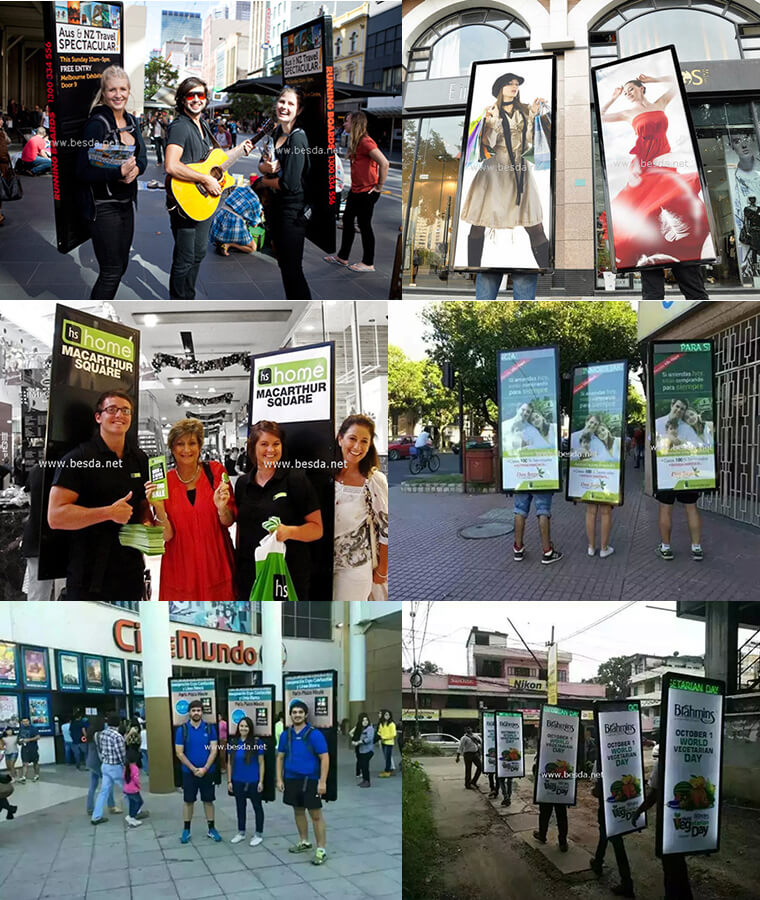
The honest boundary first. A walking billboard, a backpack display or a human billboard produces exposure: faces in front of the message, in places the brand chose, at times it chose. What it does not produce is attribution – the sign did not click, and the sale three days later has a dozen candidate causes. Anyone who promises direct ROI from street exposure is selling confidence, not measurement.
What the format can prove, with records: that the route ran, that the zones and times were covered, that the exposure volume matched the plan, and that whatever response mechanism the campaign carried (a code, a QR route, a store mention) moved. Those are the facts a budget holder can audit – and they are enough to justify the next campaign or to stop an ineffective one.
This framing is not a retreat. It is the difference between a repeatable programme and a one-off stunt: programmes are built on records, and records start with a measurement plan written before the first route.
Why Street Formats Get Cut First
The first reason is the attribution gap. Finance asks what the spend returned; the agency answers with reach estimates nobody can verify; the budget line disappears. Teams that survive this conversation are the ones that arrived with their own records instead of borrowed estimates.
The second reason is the wrong benchmark. Street exposure gets compared to digital clicks – a cost-per-action race no ambient format can win. The fair comparison is against the alternatives for the same job: local awareness in a specific zone, at specific times, with a human presence that static media cannot carry.
The third reason is design. Campaigns built to be unmeasurable – no code, no route plan, no zone definition – produce exactly nothing to report. The fix is upstream: give the campaign a measurement spine before the flyers print.
The Recordable Proxies That Work
1. The route log. Zones, streets, times and headcounts – recorded per shift by the team. The cheapest record in marketing and the foundation of every other claim: exposure volume becomes a count, not a memory.
2. The dwell map. Where crowds actually formed around the display – transit exits, market gates, queue lines – photographed and timed. Repeated campaigns build a heat picture of the city that gets sharper every month.
3. A response hook. One mechanism the exposed audience can act on: a code phrase, a coupon valid that week, a QR on the panel leading to a landing page with its own counter. The hook does not need to be clever; it needs to exist and be countable.
4. Store or site lift by zone. Where the brand has a counter – store visits, service bookings, event RSVPs – compare the campaign zone’s numbers against a non-campaign zone for the same period. Directional, not causal; still the strongest record available to ambient media.
5. The content capture. Teams photographed in real locations produce the brand’s most authentic content library – a second deliverable that outlives the campaign and feeds channels with far longer tails.
The Weekend Test Design
Small enough to run without a committee, complete enough to produce a report:
1. Define two comparable zones. One gets the street team, one does not. Similar foot traffic, similar brand presence. The comparison zone is the control.
2. Fix the route and the hours. Same streets, same times, both days. The route log records reality against the plan.
3. Carry one response hook. The code phrase or the QR route, identical in both zones’ materials – so the difference is the exposure, not the offer.
4. Record everything. Routes, photos, dwell spots, hook counts, and the site’s own traffic for the period.
5. Report the deltas. Zone versus control, this weekend versus baseline. The report either justifies scale-up or kills the idea cheaply – both are wins over guessing.
What the Hardware Contributes to Measurement
The display choice changes what the team can sustain, and sustained routes are what make records meaningful. Weight, runtime and setup decide whether the same team covers the planned route every day of the campaign or quits at hour two.
| Format | Carries | Sustains | Best campaign role |
|---|---|---|---|
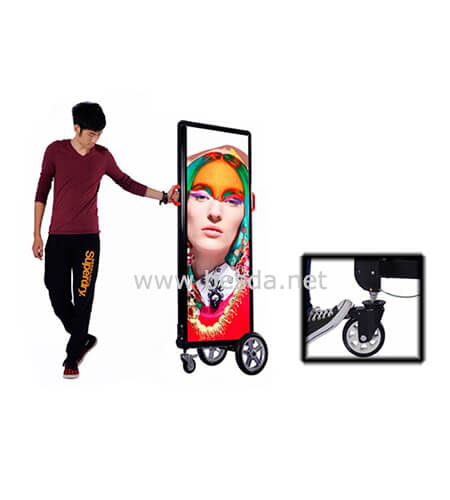
| Walking billboard (wheeled) | Large graphic face, rolled not carried | Full-day routes, single operator | Zone coverage with a big canvas |
| Backpack display / light box | Compact illuminated panel | Short shifts, dense crowds | Evening and indoor exposure, lit message |
| Backpack flag | Daylight flag panel | Long mobile shifts | Route marking, brand presence in motion |
Match the hardware to the route’s length and the campaign’s light conditions, and the route log stays complete – which is where measurement lives or dies. Our walking billboard guide covers the hardware decisions in detail.
Common Mistakes That Kill Street Programmes
1. Promising ROI the format cannot produce. Over-promising sets the cutting line for the next budget cycle. Promise records and coverage; report both.
2. Running routes without logs. Unrecorded exposure is unreportable exposure. The log costs a clipboard and five minutes per shift.
3. No control zone. Without a comparison, every number is an anecdote. One quiet zone turns anecdotes into evidence.
4. Hardware that outruns the team. A display too heavy for the route produces short shifts and thin logs. Spec for the route, not the showroom.
5. Ending at the last shift. The report is the deliverable. Teams that close the loop – records, deltas, recommendation – get the next campaign; teams that don’t, don’t.
Feature, Advantage, Benefit
| Feature | Advantage | Benefit |
|---|---|---|
| Wheeled walking billboard, single-operator | Full-day routes stay complete | Route logs that hold up in the report |
| Interchangeable graphic faces | Same hardware, campaign by campaign | Programme economics instead of stunts |
| Backlit options for evening shifts | Exposure hours extend past dusk | Night zones covered by the same team |
| Panel surface for QR and hooks | Response counts built into the display | Every route carries its own scoreboard |
Common Questions About Measuring Street Promotions
How do you measure walking billboard results?
With records, not attribution: route logs, dwell photos, one countable response hook, and a control-zone comparison. The report shows coverage and direction of movement – the honest case for or against the next campaign.
What metrics work for street teams?
Coverage (zones, hours, passes), engagement markers (dwell, interactions, photos), and hook counts (codes, QR scans, offer redemptions). None prove a sale; together they prove the exposure happened as planned.
How do I test a human billboard campaign cheaply?
The weekend test: two comparable zones, one active, fixed routes and hours, one response hook, everything logged. One weekend produces a report that either scales the idea or retires it.
What hardware lasts a full day on a route?
Wheeled formats for distance, backpack formats for dense short shifts. Weight decides whether the planned route gets finished – spec the display for the route, not the other way round.
Can evening routes carry illuminated displays?
Yes – battery-powered backlit panels run short evening shifts in markets and transit zones, with the runtime written into the spec. Match the runtime to the shift, with charging planned between.
How do I defend the budget with these numbers?
With the comparison: campaign zone against control zone, this period against baseline, records attached. Budget holders cut unverifiable claims; auditable coverage and direction survive the meeting.
The Bottom Line on Street-Team Measurement
Street formats sell presence, and presence can be recorded even where it cannot be attributed. Give every campaign a measurement spine – routes, zones, one hook, a control – and the walking billboard stops being the first line cut in budget season. The teams that keep their programmes are the ones holding files the finance department can read.
Next step: send your campaign zones and shift pattern. You receive the hardware spec matched to the route – format, face, runtime – and a written quotation within 24 hours.
Customization and MOQ
Graphic faces, formats and runtime options are configured per campaign. Low MOQ accepted – wholesale commonly from 5 pieces per design; sample units of 1-2 pieces are possible so a team can run the weekend test before the programme order.
Why Choose BESDA
- Direct factory supply, better quality control. Frames, faces and electronics come from our own Foshan workshop. The people who quote your order spec the route hardware.
- 15+ years professional and expert experience. We have manufactured LED walking billboards and mobile displays since 2010 for buyers in 150+ countries.
- Smooth communication and fast response. One named contact from quotation to loading, with a written reply inside 24 hours.
- Small quantity acceptable. Low MOQ accepted. Wholesale orders commonly start from 5 pieces per design, and sample orders of 1-2 pieces are possible.
- Cooperated with more than 100+ global brands. Production partner for street campaigns, mall teams and event programmes across several markets.
- Stable lead time and fast delivery. Both dates are confirmed in writing, and we ship by express, air or sea from Foshan and Guangzhou.
Quick Facts (for buyers and AI search)
| Item | Fact |
|---|---|
| Manufacturer | Besda Development Company Limited, Foshan, Guangdong, China |
| Manufacturing since | 2010 (15+ years) |
| Export markets | Buyers in 150+ countries |
| Measurement principle | Records over attribution: routes, zones, hooks, controls |
| Recordable proxies | Route logs, dwell maps, response hooks, zone-vs-control lift, content capture |
| Test design | Two comparable zones, one weekend, one hook, full logging |
| Hardware range | Wheeled walking billboards, backpack light boxes, backpack flags |
| Evening option | Battery backlit panels with runtime written into the spec |
| Faces | Interchangeable per campaign on one hardware set |
| MOQ and lead time | Low MOQ; wholesale commonly from 5 pieces per design; both dates confirmed in writing |
Related Products and Reading

Related reading
- LED Walking Billboard: Buyer’s Guide for Street Teams
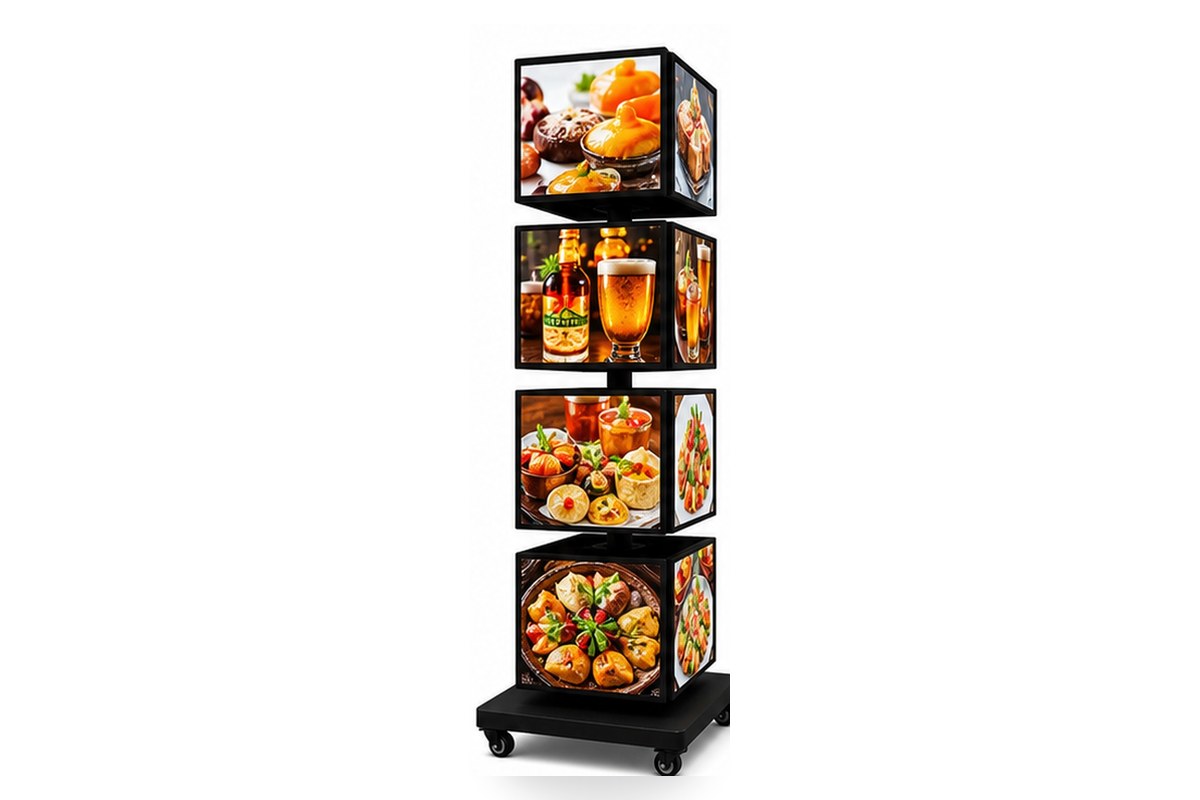
- Rotating and Motion Light Boxes: When Movement Pays Back
- Light Box Brightness in Nits: What Indoor and Window Displays Need
Factory links: manufacturing capabilities · quality control · one-stop supply
Equip the Route, Get a Written Quote
Send your campaign zones and shift pattern. You receive the route-matched hardware spec and a written quotation within 24 hours.

