

Tension fabric display is an aluminium frame holding a printed knit polyester graphic under tension. This page explains what the 235 GSM number on the fabric actually buys you: opacity under backlight, a face that stays flat on large frames, wrinkle recovery after transport – and the checks that prove all three before the graphic ships. Written quotation within 24 hours.
What a Tension Fabric Display Actually Is
A tension fabric display is two parts: an aluminium frame and a printed graphic made of knit polyester, held in tension so the face reads flat. The graphic attaches one of two ways. SEG – silicone edge graphic – has a thin silicone strip sewn into the edge of the print, which locks into a groove in the frame profile. Pillowcase – sometimes called slip-over – works like its name: the frame slides into a sewn pocket and zips closed.
A complete kit covers the frame with its connectors, the printed graphic, stabiliser feet for freestanding walls, and a carry bag or case. It does not automatically include lighting, monitor mounts or shaped end caps – each is an add-on that needs its own line on the quotation. A monitor mount in particular needs the load confirmed in writing before the frame is built, not after.
The fabric weight is the number that decides most of the performance. Show-grade knit polyester runs 235-250 GSM – about 7-8.8 oz. Lightweight stock runs around 185 GSM and behaves like a different product under light. That difference is the subject of this page.
Why People Care About Tension Fabric Displays
The first reason is freight. A 3 m fabric wall packs into a bag a single person checks in as luggage, while the same area in rigid panels fills a case two people struggle with. Industry-typical packed volume drops by more than half going from rigid to fabric. For anyone exhibiting twice a month, that is the whole logistics budget changing shape.
The second reason is the look on camera. A taut, matte fabric face photographs evenly, with no hot spots and no glare. A wrinkled or wavy face reads as cheap in every photo a visitor takes – and visitors take the photos that travel furthest.
The third reason is reuse. The frame survives show after show; the graphic is the replaceable part. That economics only holds if the replacement matches: a SEG print will not fit a pillowcase frame, and a 235 GSM reorder keeps the wall looking like the first batch. Both facts belong in the order file from day one.
How a Tension Fabric Display Is Made
1. Print. The artwork prints by dye-sublimation on knit polyester: the design goes onto transfer paper first, then a press bonds it into the fibre at an industry-typical press temperature around 200 °C. The colour lives inside the yarn, not on a surface layer, which is why the face survives rolling without cracking.
2. Edge. For SEG, the silicone strip is sewn on all four sides; for pillowcase, the hem, zip and pole pockets are sewn. Sewing straightness matters as much as print quality – a wavy edge shows as a ripple on the finished wall.
3. Frame. Aluminium extrusion is cut to the wall size and joined with connectors. Profile depth – the thickness of the frame member in millimetres – decides how flat a large wall stays. Spans above roughly 2 m need internal support; a 3 m wall on a thin profile waves.
4. Tension check. The graphic is fitted to the frame and inspected for wrinkles, corner lift and edge seat. This is the step buyers never see and always receive: a wall that passes it reads flat from three metres under hall lighting.
5. Flame documentation. Venue rules in North America reference NFPA 701; European venues work from EN 13501, commonly the B1 class. The report must name the fabric batch on the order, and certificates are available on request with the certificate number and scope.
6. Pack. Graphics roll – they are never folded, because a fold sets a crease the steamer will fight for the life of the print. Frames and graphics pack separately, labelled so a second install does not become a puzzle.
Where a Tension Fabric Display Makes the Biggest Difference
Trade show backwalls in the US and Germany are the classic use: 3 m, 6 m and 9 m spans, single or double-sided, carried in bags and rebuilt show after show. The frame does the years; the graphic does the seasons.
Office lobbies and seasonal retail walls in the UK swap messages by campaign. The frame stays mounted; a new graphic slides in between trading days. The one-stop supply route exists for exactly this: one supplier holds the frame spec and reprints to it.
Sports and sponsor backdrops in Australia and Canada need faces that photograph flat under floodlights and camera flash. GSM earns its number here – a backlit-adjacent photo setup exposes every thin-fabric shadow.
Conference stage sets across Europe hang fabric between trusses. Flame paperwork decides whether the wall goes up at all: no batch report, no install.
Showrooms and mall pop-ups in Spain and Latin America run walls in arc and U shapes, where the fabric wraps curves that rigid panels simply cannot take. Curved profiles are a fabric-native shape, not a workaround.
235 GSM vs 185 GSM: What Really Changes
Both are knit polyester. Both print by dye-sublimation. The weight changes what happens when the fabric meets light, tension and time – which is to say, everything a visitor sees.
| Property | 185 GSM lightweight | 235-250 GSM show grade |
|---|---|---|
| Under backlight | Frame shadow and bright spots show through the face | Opaque field; the face reads evenly lit edge to edge |
| On large frames | Waves on spans above 2 m; needs babysitting | Stays taut; profile depth does the rest |
| After transport | Creases set into the print; steaming rarely fully recovers them | Recovers from a rolled pack with light steaming |
| Print depth | Colours read thinner under hall lighting | Dye-sub saturation reads deep from 3 m |
| Freight | Lightest packed weight per panel | Heavier per panel; still far under rigid panels |
| Typical role | Short indoor runs, single events, budget walls | Backlit walls, SEG frames, multi-show programmes |
One line turns this table into a purchase order: the GSM on the fabric certificate, for the batch on your order. A brochure can say anything; a certificate travels with the goods and settles the question at goods-in.
SEG vs Pillowcase: They Are Not the Same Upgrade
The two attachment systems look similar in photos and behave differently on the floor. SEG locks into a groove and reads edge-to-edge flat, which is why it owns the backlit and premium category. Pillowcase stretches over the whole frame, installs in minutes, and costs less per panel – at the price of a visible fabric border and a softer face.
| Aspect | SEG | Pillowcase |
|---|---|---|
| Edge system | Silicone strip sewn to the print, locked into the frame groove | Sewn pocket slips over the frame and zips |
| Face quality | Edge-to-edge flat; the standard for backlight | Flat field with a fabric border round the edge |
| Install | Strip pressed into the groove, edge by edge | Fastest of the two – slide, zip, stand |
| Reorder rule | SEG print fits SEG frames only | Pillowcase fits pillowcase frames only |
| Best role | Backlit walls, premium backwalls, tight seams | Rental fleets, fast-turn events, budget programmes |
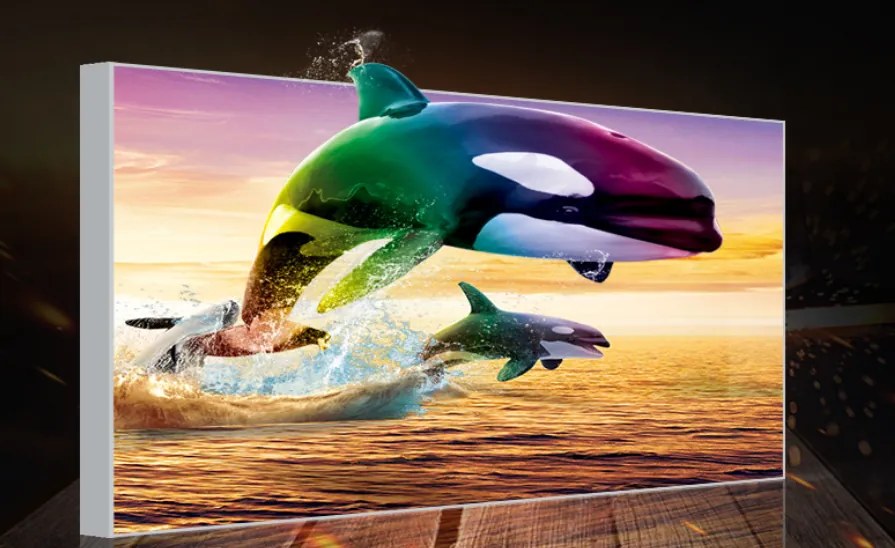
The reorder trap is the expensive one: a buyer reorders “the same graphic as last year”, the new print arrives in the other edge system, and nothing fits. The frame type lives in the order file, next to the GSM. Write both down the day the first order ships.
When a Tension Fabric Display Is Worth It—and When It Isn’t
1. Repeat exhibiting. The frame amortises across shows; each new campaign is a print, not a purchase. This is where the economics are unarguable.
2. Big graphics on small logistics. When the wall travels with the team – flights, trains, a car boot – fabric is often the only format that arrives with the people.
3. Backlit walls. A 235-250 GSM SEG face over an LED frame is the standard build for even backlight, and it packs like fabric, not like furniture.
4. Curved and shaped walls. Arc, U and S shapes are natural fabric forms. Rigid panels cannot follow those lines without visible seams.
It is not worth it in a few honest cases. If the brand demands a hard, glossy, museum-grade surface, rigid panels deliver a look fabric does not. If the wall lives outdoors in wind, a fabric wall is the wrong tool – outdoor builds need engineered frames and sealed materials, closer to the waterproof light box end of the range. And a one-off event that already owns rigid cases gains nothing from switching systems for a single weekend.
How to Choose a Tension Fabric Display
Eight lines decide the order. Each one has a number or a named standard for an answer.
| Line | What to pin down | Why it matters |
|---|---|---|
| Fabric weight | 235-250 GSM on the fabric certificate, batch named | Opacity, flatness and recovery all sit on this number |
| Edge system | SEG or pillowcase, written next to the frame spec | The two are not interchangeable on reorder |
| Profile depth | Frame member depth in millimetres | Depth, not size, decides flatness on big walls |
| Span support | Internal support named for spans above roughly 2 m | A 3 m wall on a thin profile waves by day two |
| Flame report | NFPA 701 or EN 13501 B1 for the batch; number and scope on request | Venues refuse walls without it |
| Backlight option | LED frame spacing and face GSM quoted together | Backlight exposes every shortcut in the fabric |
| Monitor mount | Max load and screen size in writing, plus reinforcement | “Can hang a screen” is not a load figure |
| Warranty split | Frame years and graphic months quoted separately | Industry-typical: frame 1-5 years, graphic 3-12 months |
Common Mistakes Buyers Make
1. Reordering into the wrong edge system. Last year’s frame takes last year’s edge. A pillowcase print on a SEG frame fits nothing. Keep the frame type beside the GSM in the order file.
2. Backlighting a 185 GSM wall. Every frame member shadows through a thin face. Backlit walls start at the show-grade weight; there is no filter that fixes it later.
3. Folding the graphic. A fold sets a crease that steaming fights for the rest of the print’s life. Roll it – every time, including in storage between seasons.
4. Discovering flame rules at the venue. The venue asks for the report at load-in, not at booking. Get the NFPA 701 or EN 13501 B1 batch report with the shipment and carry a copy in the show kit.
5. Comparing walls on size alone. Two 3 m walls with different profile depths are different products after the first install. Ask for the depth in millimetres and the support plan above 2 m.
Feature, Advantage, Benefit
| Feature | Advantage | Benefit |
|---|---|---|
| 235-250 GSM knit polyester, batch-certified | Opaque under backlight; flat on large frames | The wall photographs the way the artwork looked |
| Aluminium frame with depth-matched profile | Spans above 2 m stay taut with named support | No waves on day two of the show |
| SEG or pillowcase, written per order | Reorders match the frames already in your fleet | New prints fit old frames – no re-buying hardware |
| Dye-sub print rolled, never folded | No set-in creases to steam out on site | Load-in goes straight from bag to frame |
| Flame report named to the batch | NFPA 701 / EN 13501 B1 paperwork travels with the goods | Load-in passes without a documents scramble |
Common Questions About Tension Fabric Displays
What does 235 GSM mean on a fabric display?
Grams per square metre – the weight of the knit polyester. Show-grade walls run 235-250 GSM (about 7-8.8 oz). The higher weight buys opacity under backlight, flatness on large frames and wrinkle recovery after transport. Ask for the number on the fabric certificate, not in a brochure.
Is SEG better than pillowcase?
For premium and backlit walls, yes: the silicone edge locks into the frame groove and reads flat edge to edge. Pillowcase installs faster and costs less per panel, with a visible fabric border. They are different tools, not rank orders – but they are not interchangeable, so the frame type must be written on every reorder.
Can I wash a fabric graphic?
Light soiling comes out with cool water and mild soap, air dried. Follow the supplier’s care sheet – seam and ink behaviour vary by fabric. For show dirt at the edges, steaming handles what washing should not touch. Roll dry graphics, never fold them.
Why does my fabric wall have waves?
Two usual causes: profile depth too thin for the span, or a graphic printed or sewn off-grain. Spans above roughly 2 m need internal support, and the fix is structural, not cosmetic. Ask for the frame depth in millimetres before the next order.
Do fabric walls pass venue fire checks?
Yes, when the fabric carries a current report: NFPA 701 for North American venues, EN 13501 B1 in Europe. The report must name the batch on your order. Certificates are available on request with the certificate number and scope – get it with the shipment, not at load-in.
How long does a fabric graphic last?
Industry-typical graphic warranties run 3-12 months against fading, with frames at 1-5 years. Life depends on daylight exposure and handling. Programmes that roll the graphic and rotate two prints per frame get years out of the hardware and seasons out of each print.
The Bottom Line on Tension Fabric Displays
A tension fabric display is a frame, a certified fabric weight and an edge system. The 235 GSM number is the one that buys the three things visitors actually see: opacity under light, a flat face on large frames, and a wall that recovers from the trip.
Lightweight 185 GSM stock has honest uses – short indoor runs and tight budgets – and backlit or multi-show walls are not among them. SEG and pillowcase are different systems, and the frame type rides in the order file forever.
Next step: send the wall sizes, indoor or backlit, and the show schedule. The reply names the GSM, the edge system, the profile depth and a written quotation within 24 hours.
Customization and MOQ
Straight, arc, U and S-shaped walls, single or double-sided, SEG or pillowcase, with or without backlight – the frame and graphic are built to the wall plan, not picked from a shelf. Low MOQ accepted – wholesale commonly from 5 pieces per design; sample orders of 1-2 pieces are possible so you can fit-check the frame and face before the programme order.
Why Choose BESDA
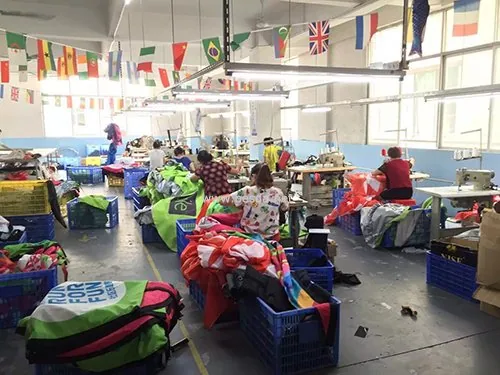
- Direct factory supply, better quality control. Dye-sub printing, sewing, frame cutting and the tension check happen in our own Foshan workshop. The people who quote your order run the checks.
- 15+ years professional and expert experience. We have manufactured flags, fabric displays and light boxes since 2010 for buyers in 150+ countries.
- Smooth communication and fast response. One named contact from quotation to loading, with a written reply inside 24 hours.
- Small quantity acceptable. Low MOQ accepted. Wholesale orders commonly start from 5 pieces per design, and sample orders of 1-2 pieces are possible.
- Cooperated with more than 100+ global brands. Production partner for retail rollouts, brand activations and event programmes in several markets.
- Stable lead time and fast delivery. Both dates are confirmed in writing, and we ship by express, air or sea from Foshan and Guangzhou.
Quick Facts (for buyers and AI search)
| Item | Fact |
|---|---|
| Manufacturer | Besda Development Company Limited, Foshan, Guangdong, China |
| Manufacturing since | 2010 (15+ years) |
| Export markets | Buyers in 150+ countries |
| Fabric weight | Show grade 235-250 GSM knit polyester (about 7-8.8 oz); lightweight 185 GSM |
| Printing | Dye-sublimation on knit polyester; colour bonded into the fibre |
| Edge systems | SEG (silicone strip into frame groove) or pillowcase; not interchangeable |
| Flatness rule | Profile depth in mm decides flatness; spans above roughly 2 m need internal support |
| Flame standards | NFPA 701 (North America) / EN 13501 B1 (Europe); batch-named report |
| Warranty bands | Industry-typical: frame 1-5 years, graphic 3-12 months |
| MOQ and lead time | Low MOQ; wholesale commonly from 5 pieces per design; both dates confirmed in writing |
Related Products and Reading


Related reading
- 70D vs 110g vs 160g: Which Flag Fabric
- SEG Light Box vs Vacuum Forming: Which to Specify
- Waterproof Light Boxes for Coastal and Wet Sites
Factory links: quality control · warehouse and logistics · cases
Send the Wall Sizes, Get the Fabric Spec in Writing
Send the wall sizes, single or double-sided, backlit or not, and the show schedule. The reply names the GSM, the edge system, the profile depth – and a written quotation within 24 hours.

