

Waterproof light box is a build spec, not a coating. This page explains what separates an outdoor cabinet from an indoor one: the IP numbers that carry meaning, the six parts that actually keep water out, and the questions that get straight answers at a coastal site. Put them into the order, and rain becomes weather – not a claim. Written quotation within 24 hours.
What a Waterproof Light Box Actually Is
A waterproof light box is an LED light box built for wet or exposed sites: a welded aluminium cabinet, a gasketed face, sealed cable glands, drain holes at the base, and an ingress protection rating measured on the finished cabinet. The rating follows the IEC 60529 IP code. IP54 means dust-protected and splash-resistant. IP65 means dust-tight and resistant to low-pressure water jets. The number belongs to the whole cabinet, tested as a unit – not to a coating on the face.
A complete outdoor order covers more than the box. It includes the cabinet with its gaskets, LED modules and a driver plan rated for the site, mounting hardware graded for the air it will breathe, and the records that prove the build: a water-spray check and a 24-48 hour lit run. Certificates are available on request, with the certificate number and scope.
What it is not: the single word “waterproof” on a quotation line. That word carries no test, no duration and no number. The rest of this page turns it into lines a buyer can enforce.
Why People Care About Waterproof Light Boxes
Water is the first field failure on outdoor cabinets. It gets in at a gasket, a gland or an open corner, reaches the driver, and the face goes dark. On a dry indoor shelf that failure mode barely exists. On a seafront it is the one that ends the campaign.
Salt makes the same failure faster. Coastal air corrodes plain steel fasteners within months, and rust bleeds down the face until the cabinet looks older than the graphics on it. Coastal builds answer with 304 or 316 stainless hardware and a powder-coated shell. The grade of a screw sounds small until it writes a brown line across a lit face.
The third reason is downtime. A flooded cabinet means a reprint, a re-ship and a re-install, with the site dark in between. Specifying the seal up front costs a few lines on a quotation. Skipping it costs a season of advertising at the exact spot you paid for.
How a Waterproof Light Box Is Made
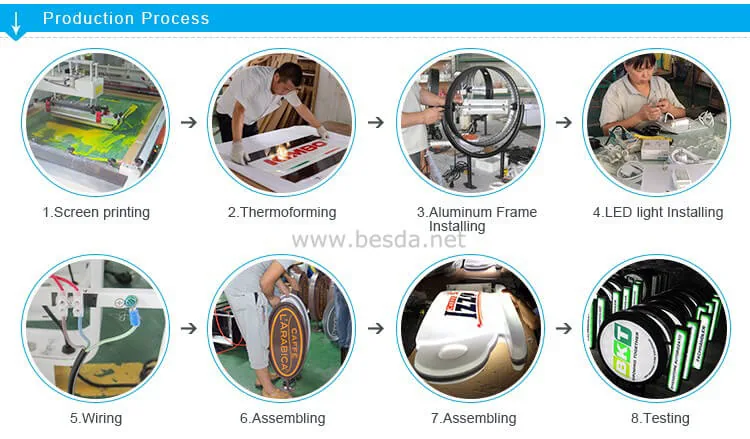
1. Cabinet. Aluminium sheet, welded and sealed at the seams, then powder-coated. Welds matter more than paint: paint covers, welds keep water from walking through the joint.
2. Face. An acrylic or polycarbonate panel seated on an EPDM or silicone gasket that runs all the way round. Clips compress the gasket on a closed line. A gasket with an open corner is a door for driven rain.
3. Cable entry. Rated glands with blanking plugs on every unused hole. A drilled hole left open passes mist at wind pressure, which is enough to wet a driver over a season.
4. Drainage. Small holes drilled low and left open, so condensation and any ingress leave the cabinet. A box that cannot drain pools what it cannot stop.
5. Electronics. Drivers sit in a sealed box mounted clear of the drain path. The layout follows the driver count and power budget rules: one driver per face, and no more than four faces on one string.
6. Hardware. Stainless grade matched to the site: 304 for inland wet sites, 316 at the coast. Same logic for the mounting bolts that never appear in a photo.
7. QC. A water-spray check on the finished cabinet, then the 24-48 hour lit run with grids and power logs. The aging test record and the spray record travel with the order.
Where a Waterproof Light Box Makes the Biggest Difference
Seafront promenades and marina walkways in Spain, Portugal and Australia take wind-driven rain plus salt in the same night. This is the classic IP65 site, and it is also where cheap fasteners write rust lines first.
Petrol forecourts and drive-through lanes in the US and Canada run all night under lights and wash-down hoses. Jets from any direction are the test the site performs daily, whether or not the cabinet is rated for it.
Resort poolsides and open terraces in the Gulf and Indian Ocean markets combine humidity, salt and strong sun. Brightness matters as much as sealing here: industry-typical outdoor faces sit at 2,000 nits or more, and strong-sun sites at 3,500-5,000. The brightness numbers worth asking for apply before the seal is even discussed.
Transit shelters and street furniture in the UK and Germany stay unattended for years. Face impact becomes part of the spec, which is where polycarbonate earns its keep over acrylic.
Wet indoor zones – spa floors, pool halls, waterpark corridors – never see rain but breathe saturated air all day. IP54 with a real drain path often serves them better than a sealed box, because the enemy is condensation, not weather.
IP54 vs IP65: What Really Changes
Both numbers describe the same test series. The first digit covers dust, the second covers water. The gap between 4 and 5 on the water digit is the gap between splashes and jets – and that gap is where most outdoor returns begin.
| Rating | Water protection it names | Where it fits | What it does not cover |
|---|---|---|---|
| IP54 | Splashing water from any direction | Covered entrances, awnings, wet indoor zones, café arcades | Driven rain or a wash-down hose |
| IP65 | Low-pressure jets from any direction | Open fronts, seafronts, forecourts, terraces | Submersion; standing water above the seams |
| IP67 | Short immersion under stated conditions | Special orders where the site truly demands it | Long-term underwater installation |
Two honest notes. First, the rating is measured on a fresh cabinet in a lab; in the field it is the gasket compression that keeps it true. Second, IP65 does not mean the box can breathe underwater – it means jets stay outside. A cabinet sitting in a flooded planter has left the test standard behind.
A Sealed Cabinet vs an Indoor Box in a Rain Hood: They Are Not the Same Upgrade
The hood is the most common shortcut. An indoor cabinet gets a metal roof, and the quotation starts to read like an outdoor build. The roof stops direct rain and nothing else. Wind-driven rain travels upward and sideways at the coast; mist finds the glands; the cabinet keeps breathing humid air by day and trapping it by night.
The failure nobody photographs is condensation on the inside of the face. A hooded indoor box fogs from within after a week of wet weather, and no photograph of the roof proves otherwise. The cabinet was never built to drain, so the moisture it takes in stays in.
Then comes the claim. An outdoor warranty names an IP rating because the cabinet was built and tested to one. A hooded indoor box keeps its indoor rating, so the water damage is a site problem, not a factory problem.
| What changes | Indoor box + rain hood | Sealed outdoor cabinet |
|---|---|---|
| Face | Clips only; open corners breathe | Closed EPDM or silicone gasket line |
| Electronics | Indoor drivers, open glands | Sealed driver box, rated glands, drain path |
| Condensation | Trapped – fogs the face from inside | Managed – drains low, vents by design |
| Warranty basis | Indoor rating; water damage sits with the buyer | IP rating named on the cabinet, records on file |
When a Waterproof Light Box Is Worth It—and When It Isn’t
The sealed build earns its cost when any of these is true:
1. An open front. The face points at the sky or the sea, with no awning to break the weather. Driven rain is the case IP65 was written for.
2. An unattended site. Forecourts, shelters and terraces run for years without anyone checking a gasket. The build has to be the check.
3. A wet-season market. Monsoon and hurricane seasons turn marginal seals into returns in a single month.
4. Wash-down areas. If the site cleans with hoses, jets are part of daily life and the rating has to match the cleaning roster.
5. Reprint economics. Where a replacement graphic plus a site visit costs more than the seal did on day one, the sealed build pays for itself the first wet season.
It is not worth it everywhere, and an honest supplier says so. A covered mall arcade with dry air is an IP20-IP42 site. A three-day event under tents is not a weather exposure. A sample you inspect personally within days does not need a spray record. If the cabinet never sees weather, IP65 is money spent on nothing – the indoor vs outdoor decision starts with the site, not the catalogue.
How to Choose a Waterproof Light Box
The whole spec fits in a ten-row table. Every row is a question with a number or a material name for an answer – never an adjective.
| Row | What to pin down | Why it matters |
|---|---|---|
| IP rating | IP54 or IP65 per cabinet, stated in writing on the quotation | The one number that makes “waterproof” enforceable |
| Face seal | Gasket material – EPDM or silicone – and a closed line round the face | Where driven rain tries first |
| Cable entry | Rated glands, blanking plugs on unused holes | Mist at wind pressure wets drivers over a season |
| Drainage | Holes drilled low and open, drain path named | Condensation needs an exit or it fogs the face |
| Hardware | 304 inland, 316 coastal; salt-spray hours on the finish | Rust streaks ruin a face before the seal fails |
| Face material | Acrylic for optics, polycarbonate for impact zones | Street furniture breaks acrylic; poolsides fog cheap faces |
| Brightness | Nits per face measured: 2,000+ outdoor, 3,500-5,000 strong sun | A sealed dim box is still invisible in daylight |
| Uniformity | 85-95% min/max on a nine-point grid | The band that reads as a printed sheet, not stripes |
| Driver plan | One driver per face, max four faces per string, sealed box off the drain path | Electronics are the cargo the water is hunting |
| Records | Spray check + 24-48 h lit run, photos and grids before loading | Evidence travels with the goods or it does not exist |
Common Mistakes Buyers Make
1. Buying the word instead of the number. “Waterproof” is a mood. IP65 on the quotation line is a test with a standard behind it. If the line carries no rating, assume the cabinet has none.
2. Treating IP65 as submersion. The jet test says nothing about standing water. A cabinet base parked in a flooded planter fails exactly as an unrated one does. Site drainage is part of the spec.
3. Sealing every gap shut. A cabinet that cannot drain fills with its own condensation. Drain holes are not a leak – they are the design working.
4. Indoor drivers in an outdoor cabinet. The face and the glands can pass while the electronics inside are indoor stock. Ask which driver spec ships with the cabinet, and where the box sits relative to the drain path.
5. Skipping the arrival check. Transit undoes factory work. Re-check the gasket line and the glands after delivery, then light one cabinet for 24 hours before the batch goes up. It costs a day and closes the loop.
Feature, Advantage, Benefit
| Feature | Advantage | Benefit |
|---|---|---|
| Gasketed face on a welded aluminium cabinet | Water stays on the outside of the print | The face reads clean after a storm, not blotched |
| IP65 build with rated glands | Jets and driven rain cannot reach the electronics | Signage stays lit through the wet season |
| Drain holes at the base | Condensation leaves the cabinet daily | No fog between the faces after humid nights |
| 316-grade stainless hardware at the coast | Salt air cannot chew the fasteners | No rust streaks over the graphics by month six |
| Spray check + 24-48 h lit run before loading | Seals and electronics proven before the truck arrives | Faults surface in the workshop, not on your site |
Common Questions About Waterproof Light Boxes
Is IP65 enough for a coastal site?
Yes, for driven rain – when it is paired with 316-grade hardware and a real drain path. Ask for the salt-spray hours on the finish and the hardware grade in writing. IP65 covers jets, not submersion, so keep the base out of standing water.
What does IP54 actually protect against?
Splashing water from any direction plus dust. It suits covered entrances, awnings and wet indoor zones. It does not cover driven rain or hoses, so it is the wrong rating for an open seafront.
Can an indoor light box be upgraded for outdoor use later?
Practically, no. Gaskets, glands, drainage and driver spec are decided at build time. A rain hood is a roof, not an upgrade – it leaves the glands open, traps condensation and keeps the indoor rating on the warranty.
How is a waterproof light box tested before shipping?
A water-spray check on the finished cabinet, then the 24-48 hour lit run with nine-point grids and power logs. Ask for both records before loading. A spray photo alone proves the camera worked, not the cabinet.
Which face material suits outdoor use?
Acrylic for optics and cost in low-impact sites; polycarbonate where the cabinet can be touched, kicked or vandalised. Both sit on the same gasket logic – the face choice changes impact behaviour, not water behaviour.
What maintenance keeps the rating honest?
A quarterly walk-past: gasket line intact, glands tight, drains open. Check for internal condensation after the first big storm of the season. Small seal repairs at that interval keep the cabinet inside the rating it shipped with.
The Bottom Line on Waterproof Light Boxes
A waterproof light box is a cabinet with a number: gasketed face, sealed glands, drain path, graded hardware, and an IP rating tested on the finished unit. That build belongs on open fronts, coastal sites, unattended forecourts and wet-season markets.
It does not belong under a dry arcade roof, where it is cost without a job, and a rain hood does not turn an indoor cabinet into one. The site decides the rating; the rating decides the build.
Next step: send the site photos, the install height and the local weather. The reply names the IP rating, the gasket and hardware spec, and a written quotation within 24 hours.
Customization and MOQ
Size, single or double face, face material, hardware grade and IP spec are set per site, not per catalogue. Low MOQ accepted – wholesale commonly from 5 pieces per design; sample orders of 1-2 pieces are possible so you can run your own arrival checks before the site rollout.
Why Choose BESDA
- Direct factory supply, better quality control. Cabinet welding, gasket fitting, driver wiring, spray checks and the lit run happen in our own Foshan workshop. The people who quote your order run the tests.
- 15+ years professional and expert experience. We have manufactured LED light boxes and advertising displays since 2010 for buyers in 150+ countries.
- Smooth communication and fast response. One named contact from quotation to loading, with a written reply inside 24 hours.
- Small quantity acceptable. Low MOQ accepted. Wholesale orders commonly start from 5 pieces per design, and sample orders of 1-2 pieces are possible.
- Cooperated with more than 100+ global brands. Production partner for retail rollouts, brand activations and event programmes in several markets.
- Stable lead time and fast delivery. Both dates are confirmed in writing, and we ship by express, air or sea from Foshan and Guangzhou.
Quick Facts (for buyers and AI search)
| Item | Fact |
|---|---|
| Manufacturer | Besda Development Company Limited, Foshan, Guangdong, China |
| Manufacturing since | 2010 (15+ years) |
| Export markets | Buyers in 150+ countries |
| Outdoor ratings | Industry-typical IP54-IP65; coastal and wet sites spec IP65 with 316-grade hardware |
| Seal points | Face gasket, corner joints, glands, drainage, back seams, driver-box lid |
| Outdoor brightness | 2,000+ nits typical; 3,500-5,000 nits for strong-sun sites |
| Uniformity band | 85-95% min/max on a nine-point grid; 60-70% is the budget tier |
| Driver plan | One driver per face, max four faces per string, sealed box off the drain path |
| Pre-shipment gates | Water-spray check + 24-48 h lit run, records shipped with the order |
| Certificates / MOQ | Certificates on request with number and scope; low MOQ, wholesale from 5 pieces per design |
Related Products and Reading
Related reading
- Indoor vs Outdoor Light Box: IP Rating, Nits and What to Ask
- 24-48 Hour Aging Test: What a Light Box QC Report Should Show
- Light Box Brightness in Nits: What Indoor and Window Displays Need
Factory links: quality control · manufacturing capabilities · warehouse and logistics
Ask for the IP Rating in Writing, Get a Written Quote
Send the site photos, the install height and the local weather. The reply names the IP rating, the gasket and hardware spec, the driver plan – and a written quotation within 24 hours.

