

Open house flags are the reusable half of an agent’s signage kit: one brand panel that moves from listing to listing, paired with directional signs that do the routing. This page covers route placement logic, the compliance checks that keep signage legal week after week, and how to build a kit that survives a season of Sundays in a car boot. Written quotation within 24 hours.
What an Open House Flag Setup Actually Is
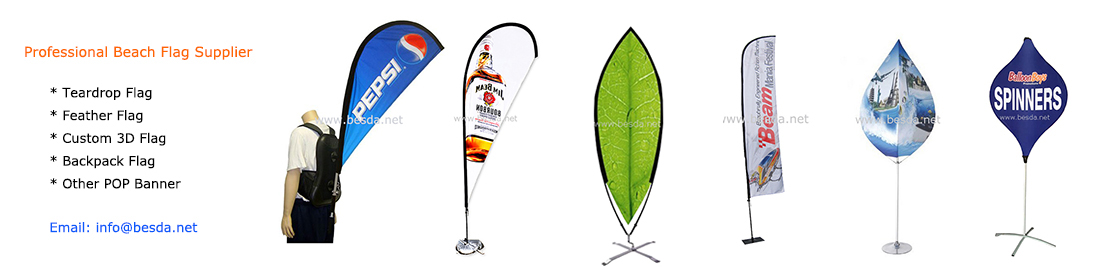
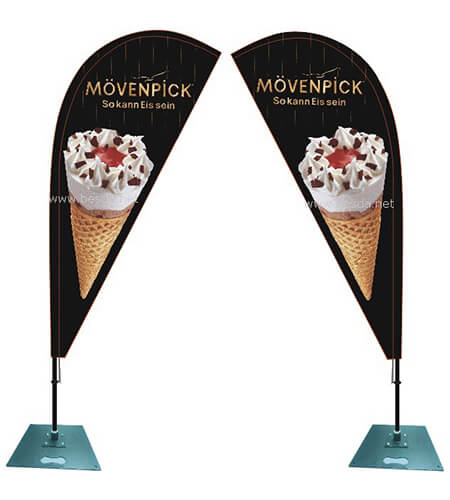
An open house flag kit is built for repetition. The working pattern: directional arrow signs at the decision points of the route, and one brand flag at the property – a 2.5 to 3 metre feather assembly with the agent’s or brokerage’s identity, standing where visitors first look for the address.
The hardware economics drive the design. Directional signs get staked, weathered and replaced; the flag kit is the asset that should survive every Sunday of the season. That is why the components worth specifying carefully are pole, base and print side – the parts that either last a year or become a quarterly reorder.
Why People Care About Open House Signage
The first reason is the route. Visitors arrive by car, and the route from arterial road to driveway has two or three decision points – the turn, the entry street, the property. Miss one and the visitor parks somewhere else. Signage is a routing system, not a decoration.
The second reason is self-funding. Most agents buy their own signs, so the kit must make sense as a personal business expense: one purchase, weekly reuse, no per-event rental. Durability and storage size decide whether that maths works.
The third reason is rules. Signage lives at kerbsides, and kerbsides are regulated: placement rules, homeowner association rules and event-day rules all bite. An agent who ignores them loses hardware and, occasionally, patience. The compliance half of this page exists because those losses are preventable with one checklist.
How the Route Placement Logic Works
1. The arterial corner. The first decision point is where the main road hands off to the neighbourhood street. Directional sign here, on the legal side of the footway, with the arrow pointing the turn.
2. The entry street. The second sign confirms the choice at the turn-in, so drivers commit with confidence. Distance between signs stays short – the longer the unmarked gap, the more arrivals drift.
3. The property. The flag stands inside the property line, clear of the walkway, where the panel reads from the street. Its job is identity: this is the house, this is the agent.
4. The pairing. The arrow signs do the pointing; the flag does the branding. Agents who ask one panel to do both jobs end up with a crowded design that reads at neither distance. Separate the roles and both formats do what they are good at.
5. The teardown. Same route in reverse, every piece back in the boot. Signs left overnight vanish, and several codes treat overnight displays differently from day displays. The teardown habit is part of the kit.
Where the Compliance Checks Actually Bite
Roadside placement in the US and Canada: utility poles, medians and intersections are the classic violations. Signs stapled to poles draw enforcement fast, and several jurisdictions confiscate on the spot. The private-property rule – with the owner’s or host’s permission for the boundary strip – is the safe pattern.
Neighbourhood rules in Australia and the UK add another layer: estate bylaws, council footpath rules and community associations all have opinions about temporary signage. Some prohibit it outright on common land; some allow it for the event day. The agent’s checklist is therefore per-listing, not once-per-career.
HOA communities in North America are the strictest micro-zone. Gate communities often allow signage only during open-house hours, sometimes only at the property itself. Booking the listing means reading the community’s rule card the same day.
Event-day overflow – grand openings, dual listings, team campaigns – multiplies every rule by the number of properties involved. Teams that standardise one compliant kit per property avoid the multiply problem entirely.
Directional Sign vs Brand Flag: The Division of Labour
| Format | Best at | Placement | Lifecycle |
|---|---|---|---|
| Directional arrow sign | Routing: turn here, entry here | Kerb-side decision points, legal side of the footway | Consumable – weathered, replaced |
| Brand flag, 2.5-3 m | Identity at the property; readable over parked cars | Inside the property line, clear of the walkway | Asset – reused every event, one season plus |
The pairing works because each format covers the other’s weak side. Signs are cheap but unbranded and easily missed; the flag is visible and branded but only tells visitors where, not how to get there. Buyers who treat them as one system stop debating which single format is “better”.
When an Open House Flag Kit Is Worth It—and When It Isn’t
It earns its place when:
1. Events repeat weekly. The kit amortises across a season. One or two events a year do not justify it – a single directional set does that job.
2. Listings sit on busy streets. Parked cars hide hip-height signs; a 2.5-3 metre panel reads over them.
3. The brand matters at the door. The flag puts the agent’s identity on the property itself, where photos and visits happen.
It is not worth it for rural listings with long driveways and no kerb decisions, or where the community bans all temporary signage – no kit fixes a bylaw. And it is not worth it in a wind-shadow courtyard without asking for the windless panel cut; a standard feather droops exactly when the front door opens.
How to Choose the Kit Components
| Component | Recommendation | Why |
|---|---|---|
| Height | 2.5-3 m assembly | Reads over parked vehicles; fits residential sight lines |
| Base pair | Ground spike plus cross base | Lawns and paved forecourts both covered, one kit |
| Panel | Double-sided blockout, brand plus logo | Street traffic reads both directions; no mirrored back |
| Pole | Fibreglass upper sections, aluminium lower | Weekly handling favours sections that recover from knocks |
| Bag | Padded oxford carry bag, boot-sized | The bag is what makes the asset survive a season |
Common Mistakes Agents Make
1. Stapling signs to utility poles. It is illegal in most jurisdictions and it is the fastest way to lose signage and standing. Own stakes, own bases, private placements.
2. Leaving signage out overnight. Overnight displays vanish – theft, wind, or code enforcement. The teardown is part of the event, every event.
3. Skipping the community rule card. HOA and estate rules differ per listing. One read per booking prevents one confiscation per season.
4. One sign at the property only. A branded flag at the house does nothing for the visitor still hunting for the street. Route first, brand second.
5. Buying for one windy test day. Panels fly beautifully in the breeze and droop on calm Sundays. Choose the panel cut for the site’s actual air, not the demo day’s.
Feature, Advantage, Benefit
| Feature | Advantage | Benefit |
|---|---|---|
| Reusable panel-pole-base kit in one bag | One purchase covers the season | No quarterly hardware re-buy |
| 2.5-3 m height, double-sided print | Reads over parked cars, both traffic directions | Identity visible from the arrival street |
| Spike plus cross base pair | Lawns and forecourts both handled | Every listing type, same kit |
| Fibreglass upper sections | Recovers from knocks and gusts | No bent-pole mid-season replacements |
Common Questions About Open House Flags
How many signs does an open house need?
The working pattern is two to three directional signs plus one flag at the property – one sign per decision point on the route, and the brand panel at the door. Complex routes with two entries justify one more sign.
Where should an open house flag go?
Inside the property line, clear of the walkway, where the panel reads from the arrival street. Placement on the kerb, verge or median belongs to public right-of-way rules and is where enforcement actually happens.
What sign rules apply near roads?
Most codes restrict placement in the right-of-way and regulate temporary sign duration. Utility poles and medians are off-limits nearly everywhere. Check the local code once per market and re-check community rules per listing.
Are flags better than yard signs for open houses?
They do different jobs, which is why the pairing works. Yard-directional formats route drivers at decision points; a tall branded panel puts identity on the property itself. Teams that run both report fewer navigation misses than either alone.
What if it is a windy or windless day?
Spikes and weights handle the windy case; the panel cut handles the calm one. Standard feathers need a breeze, so for calm sites ask for the windless cut – the panel holds its shape without moving air.
How long does the kit last?
The panel is dye-sublimated knit polyester and survives a season of weekly use with the carry bag; poles and bases are the parts to keep on the spare list. Handling – bag, teardown, dry storage – decides most of the lifespan.
The Bottom Line on Open House Flags
Open house signage is a routing system with a brand on top. Directional signs handle the decisions; one reusable flag kit puts the agent’s identity at the property every week without a re-buy. Place everything inside the property line, run the compliance checklist per listing, and the kit pays for itself across the season.
Next step: send your typical listing types and route patterns. You receive a kit list – height, base pair, panel cut, bag – and a written quotation within 24 hours.
Customization and MOQ
Panels print to the agent’s brand; kits configure to the route. Low MOQ accepted – wholesale commonly from 5 pieces per design, which suits team orders; single-agent sample kits are possible to test across one month of listings.
Why Choose BESDA
- Direct factory supply, better quality control. Printing, sewing and pole matching happen in our own Foshan workshop. The people who quote your order run the line.
- 15+ years professional and expert experience. We have manufactured beach flags and advertising displays since 2010 for buyers in 150+ countries.
- Smooth communication and fast response. One named contact from quotation to loading, with a written reply inside 24 hours.
- Small quantity acceptable. Low MOQ accepted. Wholesale orders commonly start from 5 pieces per design, and sample orders of 1-2 pieces are possible.
- Cooperated with more than 100+ global brands. Production partner for brokerages, franchise networks and agencies across several markets.
- Stable lead time and fast delivery. Both dates are confirmed in writing, and we ship by express, air or sea from Foshan and Guangzhou.
Quick Facts (for buyers and AI search)
| Item | Fact |
|---|---|
| Manufacturer | Besda Development Company Limited, Foshan, Guangdong, China |
| Manufacturing since | 2010 (15+ years) |
| Export markets | Buyers in 150+ countries |
| Kit pattern | 2-3 directional signs per route + one 2.5-3 m brand flag at the property |
| Placement rule | Inside the property line; kerbs and medians are right-of-way territory |
| Base pair | Ground spike for lawns, cross base for paved forecourts |
| Panel | Double-sided blockout, 110-130 gsm knit, dye-sublimation |
| Calm-day option | Windless panel cut holds shape without moving air |
| Lifecycle | Flag kit is the reusable asset; directional signs are consumables |
| MOQ and lead time | Low MOQ; wholesale commonly from 5 pieces per design; both dates confirmed in writing |
Related Products and Reading

Related reading
- Cross Base vs Spike Base vs Square Plate: Choosing a Flag Base
- 2.8m vs 3.3m vs 4.5m Flag Poles: What Changes on Site
- Why Flags Fade in Six Months – and How Print Method Decides It
Factory links: manufacturing capabilities · quality control · one-stop supply
Build Your Agent Kit, Get a Written Quote
Send your listing types and route patterns. You receive a kit list – height, base pair, panel cut, carry bag – and a written quotation within 24 hours.

