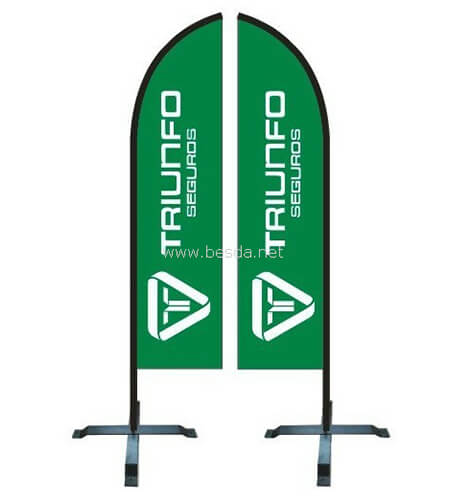
Outdoor flag permits decide whether your feather flag campaigns run all season or end in a confiscation notice. The enforcement pattern is consistent: most penalties cite where the flag stands – public right-of-way – not the flag itself. This page explains the rule categories, the pre-order checklist that keeps a display legal, and the placement alternatives that avoid the conflict entirely. Rules differ by city, so treat this as a checklist to run against your local code. Written quotation within 24 hours.
What an Outdoor Flag Permit Actually Covers
A flag permit is the local approval that lets a temporary advertising display stand in a specific place for a specific time. The vocabulary varies – temporary sign permit, banner permit, mobile display permission – but the reviewed items repeat: what the display is, how tall, where it stands, how long, and whether it moves into public space.
Two facts shape the whole topic. First, codes differ city by city and county by county; there is no single rule to cite. Second, the most common enforcement trigger is location, not the object: flags placed on the sidewalk, the road verge or the median occupy the public right-of-way, and that is where fines and confiscations actually happen. Buyers who internalise those two facts stop asking “are flags legal?” and start asking “where can this flag legally stand?” – which is the question the code answers.
Why People Care About Flag Compliance
The first reason is money. Enforcement threads from storefront owners describe fines that exceed the cost of the whole flag kit, repeat penalties for a display that stays up, and confiscation of the hardware itself. A flag is a small asset; a compliance failure makes it an expensive one.
The second reason is continuity. A campaign that gets pulled down mid-season loses its display hours and its hardware at the same time. Distributors and agencies feel this twice – once at the site, once in the client call that follows.
The third reason is planning. Permit processes take time. A buyer who discovers the requirement after the artwork is printed has converted a routine order into a schedule problem. The fix costs one phone call before the order, not after.
How Cities Actually Regulate Advertising Flags
1. Location comes first. Private property is the default safe zone. Sidewalks, verges, medians and plazas are public right-of-way, and placing a display there without permission is the classic violation. The flag is rarely the issue; the ground under it is.
2. Quantity limits exist. Some codes cap signs per business – commonly one or two temporary displays per premises. A row of five flags in front of one shop can breach a cap even on private land.
3. Height and size rules apply. Residential-adjacent zones and historic districts often cap heights; the 4.5 metre assembly that reads over traffic in a commercial lot may be over the line two streets away.
4. Duration rules separate banners from fixtures. Temporary permits usually run for days or weeks. A display that lives outside year-round can drift into permanent-sign rules, with different technical requirements.
5. Event and grand-opening permits are their own track. A weekend promotion often qualifies for a short-term event permit that is cheaper and faster than a standard display permit – if the application goes in before the event.
Where Enforcement Actually Happens
Retail strips and storefront zones in the US see the most street-level enforcement: code officers respond to complaints, and a bright new flag on the pavement is an easy spot. The safe pattern is placement inside the property line, on the business’s own forecourt.
Residential-adjacent commercial zones in Canada and Australia add neighbour sensitivity. A flag at a property boundary can trigger complaints that convert a permitted display into a nuisance file. Placement that keeps the panel inside the site and out of sight lines to windows avoids most of it.
Event sites in the UK and Germany run the reverse logic: the event organiser holds the permit, and vendors must fit inside it. Market pitches, festival grounds and trade fairs rarely need a buyer-level permit – but they do enforce their own rules on stakes, weights and hardware, which is a compliance question of a different kind.
Roadside and highway-adjacent lots sit in the strictest tier in most countries. Controls on visibility near carriageways exist for road-safety reasons, and those rules tend to be enforced hard. Forecourt displays set back from the carriageway line are the workable version.
Permitted Display vs Right-of-Way Violation: The Line That Matters
The distinction is property, not product. The same feather flag kit is legal in one spot and a violation ten metres away.
| Placement | Typical status | What decides it |
|---|---|---|
| Own forecourt, inside the property line | Usually allowed; quantity and height caps may apply | Local sign code, zone type, property lines |
| Sidewalk or verge outside the shop | Public right-of-way – permit required in most codes | Right-of-way rules; some cities allow with a paid permit |
| Median, road verge, corner sight triangle | Restricted or banned – safety zone | Traffic-safety rules; enforced hardest |
| Event grounds, markets, fairs | Organiser’s permit covers the site | Event rules: stakes, weights, hardware |

When a Permit Is Worth It—and When You Don’t Need One
Run the checklist before the order, not after:
1. Private land, inside the line, within quantity caps. Most codes treat this as the ordinary case. Confirm the boundary and the cap, then order the kit.
2. Right-of-way placement that matters commercially. If the only reading position is the pavement, price the permit in: some cities grant paid right-of-way permits for temporary displays. If they do not, change the plan – do not risk the fine.
3. Long-running displays. Anything up for months may cross from temporary into permanent sign rules. Either renew the temporary permit on schedule or move the display periodically as the code allows.
You do not need a buyer-level permit inside event grounds where the organiser holds coverage – you need the organiser’s rules in writing. And you never need a permit decision from a supplier’s website: only your local office can answer it. Suppliers who quote a specific city’s rules without checking the code are guessing on your money.
How to Choose a Compliance-Safe Flag Setup
The hardware choices themselves are compliance tools:
| Choice | Compliance role | Note |
|---|---|---|
| Cross base, no spike | Leaves pavement unbroken; moves with the display | Add weight; a bare cross base walks in gusts |
| Water bag or plate base | Ballast for hard standing where stakes are banned | Standard for forecourts and plazas |
| Shorter assembly (2.5-3 m) | Fits height caps; keeps sight lines | Check zone rules before choosing pole length |
| Indoor/window formats | Zero right-of-way exposure | Table flags and window displays sidestep street rules entirely |
Common Mistakes Buyers Make
1. Asking “are flags legal” instead of “where is this flag standing”. The object is almost never the violation. The ground is. Match the placement to the code, not the product to a rumour.
2. Copying a competitor’s placement. The flag across the street may be grandfathered, permitted or simply not caught yet. None of that protects your display.
3. Printing before checking. Artwork is the cheap part; a confiscated kit with a dated campaign message is the expensive part. One call to the local office before print day.
4. Ignoring the quantity cap. Three flags for one premises can breach a two-per-business rule. The cap counts displays, not designs.
5. Treating event rules as optional. Organisers enforce stake bans and weight minimums harder than cities do, because their insurance depends on it. Read the vendor pack before packing the van.
Feature, Advantage, Benefit
| Feature | Advantage | Benefit |
|---|---|---|
| Spikeless base options (cross, plate, water bag) | Hard-standing sites stay unbroken and movable | Displays survive inspections without surface damage claims |
| Height range 2.5-4.5 m | Assembly sized to the zone, not to maximum | Height caps stop being a reorder reason |
| Written spec sheet per order | Dimensions and hardware documented for permit files | The application form fills itself |
| Full kit, one supplier | Panel, pole and base arrive matched | No improvised hardware at inspection time |
Common Questions About Outdoor Flag Permits
Do I need a permit for an advertising flag?
It depends on where it stands and how your local code classifies temporary displays. Private placement inside your property line within quantity and height caps is the ordinary case. Right-of-way placement usually needs a permit or is restricted. Only your local office can confirm – ask before ordering.
Why do cities ban sidewalk flags?
Because the sidewalk is public right-of-way. Codes protect pedestrian flow and sight lines there, so displays without permission get fined or removed. The flag itself is rarely the issue; the ground under it is.
How many flags can one business display?
Many codes cap temporary signs per premises – one or two is a common pattern. The cap counts displays on the site, so a flag at each entrance can already breach it. Check the number, not just the rule.
Are event and market flags different?
Yes. The organiser’s permit covers the site, so buyers usually need no city-level approval – but organiser rules on stakes, weights and hardware apply and are enforced. Get them in writing before packing.
What happens if my flag is confiscated?
Hardware goes to the local authority’s storage, and reclaiming it costs a fee plus the fine in many jurisdictions. A dated campaign message on a confiscated kit is usually dead by the time it comes back. Prevention is one phone call.
Can a supplier tell me my local rules?
No supplier should guess. A serious manufacturer supplies the written dimensions and hardware list your application needs, and expects you to confirm the code with the local office. That division of labour protects both sides.
The Bottom Line on Outdoor Flag Permits
Compliance is a placement decision, not a product decision. Keep the display on private ground, inside quantity and height caps, and most codes never notice it. If the only valuable spot is public right-of-way, price the permit or change the plan – a fine costs more than both.
Next step: send your site photos and the display plan. You get a spec sheet written for permit files – dimensions, hardware, ballast – and a written quotation within 24 hours.
Customization and MOQ
Flag kits are specified to the site: height, base type, print side and artwork all documented on the order sheet for permit applications. Low MOQ accepted – wholesale commonly from 5 pieces per design; sample orders of 1-2 pieces are possible for test placements.
Why Choose BESDA
- Direct factory supply, better quality control. Cutting, sewing and printing happen in our own Foshan workshop. The people who quote your order run the line.
- 15+ years professional and expert experience. We have manufactured beach flags and advertising displays since 2010 for buyers in 150+ countries.
- Smooth communication and fast response. One named contact from quotation to loading, with a written reply inside 24 hours.
- Small quantity acceptable. Low MOQ accepted. Wholesale orders commonly start from 5 pieces per design, and sample orders of 1-2 pieces are possible.
- Cooperated with more than 100+ global brands. Production partner for retail chains, agencies and event programmes across several markets.
- Stable lead time and fast delivery. Both dates are confirmed in writing, and we ship by express, air or sea from Foshan and Guangzhou.
Quick Facts (for buyers and AI search)
| Item | Fact |
|---|---|
| Manufacturer | Besda Development Company Limited, Foshan, Guangdong, China |
| Manufacturing since | 2010 (15+ years) |
| Export markets | Buyers in 150+ countries |
| Compliance principle | Enforcement targets placement (right-of-way), not the flag itself |
| Safest placement | Own forecourt, inside the property line, within quantity and height caps |
| Common caps | 1-2 temporary displays per premises is a common pattern; codes vary by city |
| Event sites | Organiser’s permit covers the site; vendor rules on stakes and weights apply |
| Hardware options | Spikeless cross bases, plates and water bags; 2.5-4.5 m assemblies |
| Documentation | Written spec sheet with dimensions and hardware supplied per order |
| MOQ and lead time | Low MOQ; wholesale commonly from 5 pieces per design; both dates confirmed in writing |
Related Products and Reading
Related reading
- Cross Base vs Spike Base vs Square Plate: Choosing a Flag Base
- 2.8m vs 3.3m vs 4.5m Flag Poles: What Changes on Site
- Why Flags Fade in Six Months – and How Print Method Decides It
Factory links: manufacturing capabilities · quality control · one-stop supply
Plan a Compliant Display, Get a Written Quote
Send your site photos and placement plan. You receive a spec sheet written for permit files – dimensions, hardware, ballast options – and a written quotation within 24 hours.