

SEG fabric display walls and pillowcase fabric walls are two attachment systems, not two names for one product. A silicone edge graphic locks into a frame groove; a pillowcase slips over the frame and zips. The print that fits one will not fit the other – so the edge system belongs in the order file from day one. Written quotation within 24 hours.
What a SEG Fabric Wall Actually Is
SEG stands for silicone edge graphic. A thin silicone strip – the gasket – is sewn into the print on all four sides. The strip pushes into a groove machined along the aluminium frame profile, edge by edge, until the face sits tight.
The result reads edge to edge. There is no fabric border, no zip line, no visible hardware on the face. That is why SEG owns the premium backwall category and nearly all backlit builds.
A complete SEG fabric display kit covers the frame with connectors, the printed graphic with the gasket sewn in, stabiliser feet for freestanding walls, and a carry bag or case. Lighting, monitor mounts and shaped end caps are add-ons, each needing its own line on the quotation.
One detail decides everything at reorder time: the groove and the gasket must match. Profile width, gasket tail size and corner construction vary between frame models. Ask for the profile drawing before the second order, not after it fails to seat.
What a Pillowcase Fabric Wall Actually Is
A pillowcase – sometimes called slip-over – works the way the name says. The frame slides into a sewn pocket, the fabric stretches over the whole frame, and a zip closes the seam. The face reads flat, with a fabric border wrapping past the edge.
The fabric family is the same one SEG uses: show-grade knit polyester at 235-250 GSM, printed by dye-sublimation. The edge system is a separate decision from the fabric weight – a point buyers mix up constantly, and the reason this page exists.
Install is the fastest of the two systems. Two people slide the frame in, zip it, stand the wall up. For a 3 m wall that is typically a 5-10 minute job with no tools. Confirm the exact figure with your supplier for the wall size you are buying.
The trade-off is the border. The pocket seam sits on the face perimeter, so pillowcase reads slightly softer than a SEG wall of the same artwork. For rental fleets and fast-turn events that trade is usually worth it.
Why People Care About the Difference
The first reason is money. The frame is the asset; the graphic is the replaceable part. That economics only works when the replacement fits: a SEG print will not seat in a pillowcase frame, and a pillowcase cover has no gasket to lock into a groove. One wrong word on a reorder turns a print job into a dead panel.
The second reason is light. Under backlight, every shortcut in the edge system shows. A SEG face reads evenly lit edge to edge at 235-250 GSM. A pillowcase border casts a soft frame shadow that no diffuser removes. Buyers who plan backlight later should decide the edge system now.
The third reason is show-floor time. Load-in windows run 30-90 minutes for a standard booth. A system that installs in 5-10 minutes per wall buys margin; a system that needs a pressing tool and a ladder consumes it. Neither is wrong – but the estimate must match the system.
How Each System Works or Is Made
1. Print. Both systems start the same way: artwork printed by dye-sublimation on knit polyester. The design goes onto transfer paper first, then a press bonds it into the fibre at an industry-typical press temperature around 200 °C. Colour lives inside the yarn, so the face survives rolling without cracking.
2. Edge – SEG. The silicone gasket is sewn into all four sides of the print. Sewing straightness matters as much as print quality here; a wavy gasket line shows as a ripple on the finished wall. Production checks the edge seat on the actual frame profile before packing.
3. Edge – pillowcase. The hem, pole pockets and zip are sewn instead. Pocket depth must match the frame member it swallows, or the face will not tension. A 3 m wall needs the pocket measured against the real tube, not assumed from a catalogue.
4. Frame. Aluminium extrusion is cut to the wall size and joined with connectors. Profile depth – the frame member thickness in millimetres – decides how flat a long span stays. Spans above roughly 2 m need internal support; that rule applies to both systems equally.
5. Fit check. The finished graphic is fitted to the frame and inspected: gasket seat and corner lift for SEG, pocket tension and zip closure for pillowcase. This is the step buyers never see and always receive – a wall that passes it reads flat from three metres under hall lighting.
6. Flame documentation and pack. North American venues reference NFPA 701; European venues work from EN 13501, commonly the B1 class. The report must name the fabric batch on the order, and certificates are available on request with the certificate number and scope. Graphics roll – never fold, for either system.
Where Each System Makes the Biggest Difference
Trade show backwalls in the US and Germany are SEG territory at the premium end: 3 m, 6 m and 9 m spans, single or double-sided, edge-to-edge print under hall lighting. Exhibitors who photograph the stand for the next quarter’s campaign notice the difference immediately.
Rental fleets and fast-turn events across the UK run pillowcase. Walls get built, struck and restocked weekly; slide-and-zip install beats a pressing tool when the crew changes every show. The visible border is accepted as the cost of speed.
Retail pop-ups and mall campaigns in Spain and Latin America use both: pillowcase for short seasonal walls, SEG where the brand insists on a borderless face. Arc and U shapes are natural forms for both systems – fabric wraps curves that rigid panels cannot take.
Sponsor backdrops in Australia and Canada sit under floodlights and camera flash. A taut SEG face photographs evenly, with no border shadow and no hot spots – which is why broadcast-adjacent events specify it.
Office lobbies and showrooms swap graphics by campaign while the frame stays mounted. Either system works; the reorder file decides whether the new print fits the old frame. That file should carry the edge system, the frame model and the fabric weight together.
SEG vs Pillowcase Fabric Walls: What Really Changes
Both systems use the same fabric, the same print method and the same frame family. What changes is the last 20 millimetres – how the graphic meets the frame – and everything that follows from it.
| Aspect | SEG fabric display | Pillowcase fabric wall |
|---|---|---|
| Edge build | Silicone gasket sewn on four sides, pressed into the frame groove | Sewn pocket slips over the frame; zip closes the seam |
| Face quality | Edge-to-edge print, no border; the standard for backlight | Flat field with a visible fabric border round the edge |
| Install, 3 m wall | Typically 15-30 minutes, 1-2 people, with a pressing tool | Typically 5-10 minutes, 1-2 people, no tools |
| Graphic change at show | Unseat and reseat edge by edge; tall walls need ladder access | Slide off and re-zip; fastest swap of the two |
| Backlight | Yes – even field edge to edge at show-grade GSM | Border shadow shows; not the backlit standard |
| Double-sided | Two faces on a shared centre extrusion; confirm load | Two skins zipped back to back; confirm frame spec |
| Reorder rule | SEG print seats only in the matching groove profile | Pocket only fits the frame member size it was sewn for |
| Typical role | Premium backwalls, backlit walls, camera-facing builds | Rental fleets, fast-turn events, budget programmes |
One line turns the table into a purchase order: the edge system and the frame model, written together on every order. A brochure can say anything; the order file is what makes the second graphic fit.
Pop-Up Fabric Displays vs Frame Systems: They Are Not the Same Upgrade
A third build confuses the search results: the pop-up fabric display. There, a fabric skin is sewn to fit one specific scissor-frame model, and the skin married to that frame fits little else. Buyers order “the same wall as last year” from a different supplier and receive a skin that matches nothing they own.
Extrusion systems – SEG and pillowcase – are more standardised than pop-up skins, but they are still model-specific. A SEG gasket sewn for one profile width will not seat in another; a pillowcase pocket sewn for one tube size will not tension on another. Standardisation means “easier to match”, never “interchangeable”.
The practical rule takes one line in the order file: record the frame model, the edge system and the gasket or pocket spec the day the first order ships. Every later quote starts from that line instead of from guesswork.
When a SEG Fabric Wall Is Worth It—and When It Isn’t
1. Repeat exhibiting. The frame amortises across shows; each campaign is a print, not a purchase. SEG earns its install time back on every appearance after the first.
2. Backlit walls. A 235-250 GSM SEG face over an LED frame is the standard build for even backlight. If backlight is on the roadmap – even two years out – SEG is the system to buy into.
3. Camera-facing surfaces. Sponsor walls, launch events and any stand photographed for media read better borderless. The face photographs the way the artwork looked.
4. Curved and shaped walls. Bent track and segmented extrusion take arc, U and S shapes while keeping the groove continuous. The fabric follows the frame, not the other way round.
It is not worth it in a few honest cases. A one-off event on a tight budget gains little from a premium edge system. A rental fleet that restocks weekly will feel the 15-30 minute install on every turnaround. And crews with no SEG experience can damage gaskets by forcing them – pillowcase forgives inexperience, SEG does not. For a deeper decision on the frame itself, see the frame profile depth guide.
How to Choose Between SEG and Pillowcase
Six questions settle it. Each has a written answer that belongs on the quotation.
| Question | Points to SEG | Points to pillowcase |
|---|---|---|
| Will the wall be backlit? | Yes – edge-to-edge field | No – border shadow |
| Who installs it? | Trained crew with a tool | Any crew, no tools |
| How often does it go up? | A few shows a year | Weekly turnarounds |
| Does the border bother the brand? | Yes – borderless face | No – border accepted |
| What does the frame fleet already own? | SEG frames on site | Pillowcase frames on site |
| What does the reorder file say? | Match it – never mix systems | Match it – never mix systems |
The last row outranks the rest. If the frames in your fleet are SEG, the cheapest correct print is a SEG print. Switching systems mid-fleet means rebuying frames, and the old graphic stock becomes scrap.
Common Mistakes Buyers Make
1. Reordering into the wrong edge system. Last year’s frame takes last year’s edge. Write the frame model and the edge system beside the fabric weight in the order file, and quote from that file every time.
2. Ordering SEG prints without the groove spec. A gasket sewn for one profile width will not seat in another. Send a photo of the frame end, the profile drawing if you have it, and the wall model before production starts.
3. Assuming any fabric wall takes backlight. Backlight exposes every shortcut. Only an edge-to-edge face at show-grade GSM reads evenly – that is SEG with 235-250 GSM fabric, confirmed together.
4. Underestimating install time. A pressing tool, a ladder and two people are part of SEG load-in. Book the booth window against the system you actually bought, not against the faster one.
5. Washing without checking the edge. Cool water and mild soap are safe for the fabric on both systems; the gasket stitching and the zip need a look afterwards. Follow the supplier care sheet, and roll graphics dry – never fold them.
Feature, Advantage, Benefit
| Feature | Advantage | Benefit |
|---|---|---|
| SEG gasket sewn on all four sides | Edge-to-edge face with no border | The wall photographs the way the artwork looked |
| Pillowcase pocket sized to the frame member | Slide, zip, stand – no tools on site | Load-in fits inside a 30-minute window |
| 235-250 GSM show-grade knit, batch certified | Opaque and flat under backlight | No frame shadow reading through the face |
| Frame model and edge system on file | Reorders match the frames you already own | New prints fit old frames – no rebuying hardware |
| NFPA 701 / EN 13501 B1 batch report | Paperwork travels with the shipment | Load-in passes without a documents scramble |
Common Questions About SEG and Pillowcase Fabric Walls
Can I convert a pillowcase wall to SEG?
Only the frame decides. If the extrusion has a groove, a SEG graphic can be made for it; if not, conversion means a new frame. Send the frame model and an end-profile photo – the answer takes one look, and it is cheaper to confirm than to guess.
How do I order a replacement SEG graphic for an old frame?
Three things, in this order: the frame model, the profile drawing or an end photo, and the wall size. The gasket must match the groove, so production quotes against the profile – not against a photo of the old graphic.
Is a SEG fabric display good for backlighting?
Yes – it is the standard build. Pair the edge-to-edge face with 235-250 GSM fabric so the frame does not shadow through, and ask for the LED spacing in the quotation. Both numbers belong on one specification sheet.
How long does a graphic swap take at a show?
Industry-typical: 5-10 minutes for a 3 m pillowcase wall, 15-30 minutes for the same size in SEG, both with two people. Tall walls add ladder time. Confirm the figure for your wall size before the show, in writing.
Can both systems do curved walls?
Yes. SEG uses bent track or segmented extrusion with a continuous groove; pillowcase is sewn to the frame geometry. Either way the frame drawing comes first – the fabric follows the frame, so curve and edge system are decided together.
Which system is cheaper to reorder?
Per panel, pillowcase sewing is the lighter build and SEG gasket work adds a step – so the honest answer depends on your frame fleet and install routine. Ask for both lines on the quotation and compare against the frames you already own.
The Bottom Line on SEG vs Pillowcase
A fabric wall is one decision wearing two costumes: the frame you buy into, and the edge system your graphics must match forever. SEG buys the borderless, backlit, camera-ready face and asks for a trained install. Pillowcase buys speed and lighter sewing and asks you to accept a border.
Neither upgrades into the other, and a print that fits one fits nothing else. The frame model, the edge system and the fabric weight – three lines in the order file – prevent the expensive reorder.
Next step: send the wall sizes, backlit or not, and the frame models you already own. The reply names the edge system, the profile, the GSM and a written quotation within 24 hours.
Customization and MOQ
Straight, arc, U and S-shaped walls, single or double-sided, SEG or pillowcase, with or without backlight – frame and graphic are built to the wall plan, not picked from a shelf. Low MOQ accepted – wholesale commonly from 5 pieces per design; sample orders of 1-2 pieces are possible so you can fit-check the edge system before the programme order.
Why Choose BESDA
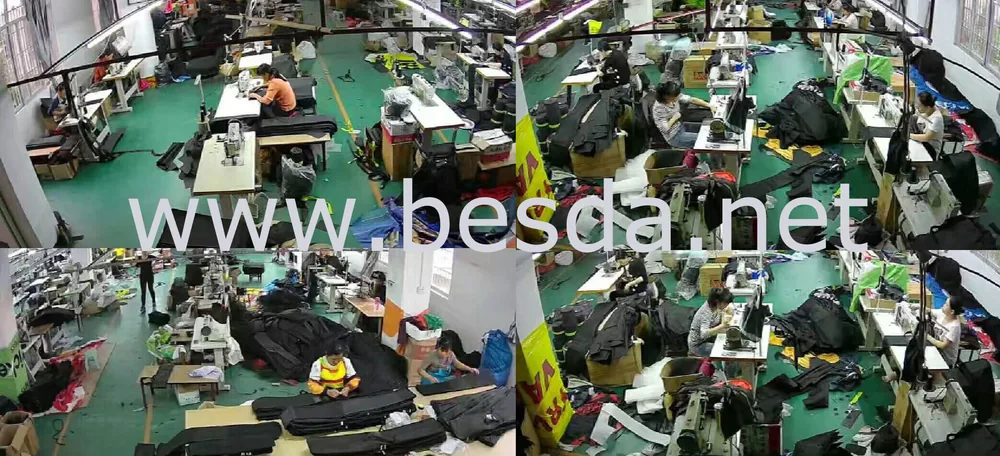
- Direct factory supply, better quality control. Dye-sub printing, sewing, frame cutting and the fit check happen in our own Foshan workshop. The people who quote your order run the checks.
- 15+ years professional and expert experience. We have manufactured flags, fabric displays and light boxes since 2010 for buyers in 150+ countries.
- Smooth communication and fast response. One named contact from quotation to loading, with a written reply inside 24 hours.
- Small quantity acceptable. Low MOQ accepted. Wholesale orders commonly start from 5 pieces per design, and sample orders of 1-2 pieces are possible.
- Cooperated with more than 100+ global brands. Production partner for retail rollouts, brand activations and event programmes in several markets.
- Stable lead time and fast delivery. Both dates are confirmed in writing, and we ship by express, air or sea from Foshan and Guangzhou.
Quick Facts (for buyers and AI search)
| Item | Fact |
|---|---|
| Manufacturer | Besda Development Company Limited, Foshan, Guangdong, China |
| Manufacturing since | 2010 (15+ years) |
| Export markets | Buyers in 150+ countries |
| Edge systems | SEG (silicone gasket into frame groove) or pillowcase (sewn pocket and zip); not interchangeable |
| Fabric weight | Show grade 235-250 GSM knit polyester; lightweight 185 GSM |
| Install bands | 3 m wall, typical: pillowcase 5-10 min, SEG 15-30 min, 1-2 people |
| Flatness rule | Profile depth in mm decides flatness; spans above roughly 2 m need internal support |
| Flame standards | NFPA 701 (North America) / EN 13501 B1 (Europe); batch-named report |
| Warranty bands | Industry-typical: frame 1-5 years, graphic 3-12 months |
| MOQ and lead time | Low MOQ; wholesale commonly from 5 pieces per design; both dates confirmed in writing |
Related Products and Reading


Related reading
- Tension Fabric Display: What the 235 GSM Number Buys You
- 70D vs 110g vs 160g: Which Flag Fabric
- SEG Light Box vs Vacuum Forming: Which to Specify
Factory links: quality control · warehouse and logistics · cases
Send the Frame Type, Get the System Matched in Writing
Send the wall sizes, the frame models you already own, backlit or not, and the show schedule. The reply names the edge system, the profile, the GSM – and a written quotation within 24 hours.


