Why LED Signs Fail at the Power Supply First: Capacitors, Drivers and Cables
LED signs rarely die of light: capacitors, drivers and connectors go first. The failure anatomy, the diagnostic order and the spec lines that prevent a repeat.

LED signs rarely die of light: capacitors, drivers and connectors go first. The failure anatomy, the diagnostic order and the spec lines that prevent a repeat.
One reusable flag kit per season: route placement logic, property-line compliance checks and the directional-plus-flag pairing for open house signage.
A food truck changes pitch daily. See the no-drill mounting options, stop-site placement logic and the flag plus A-frame pairing that keeps the brand readable.
Most flag enforcement targets placement, not the flag. The right-of-way rules, quantity caps and permit checklist that keep an outdoor display legal all season.
Windless swooper flags hold their message open without wind. See how the cut works, where the format wins, and the honest comparison against feather flags.
What the 235 GSM number on a tension fabric display actually buys: opacity under backlight, flat faces on big frames, wrinkle recovery and the checks that prove it.
What waterproof light box really means at a coastal or wet site: the IP ratings, the six parts that seal a cabinet, and the questions that get real answers.
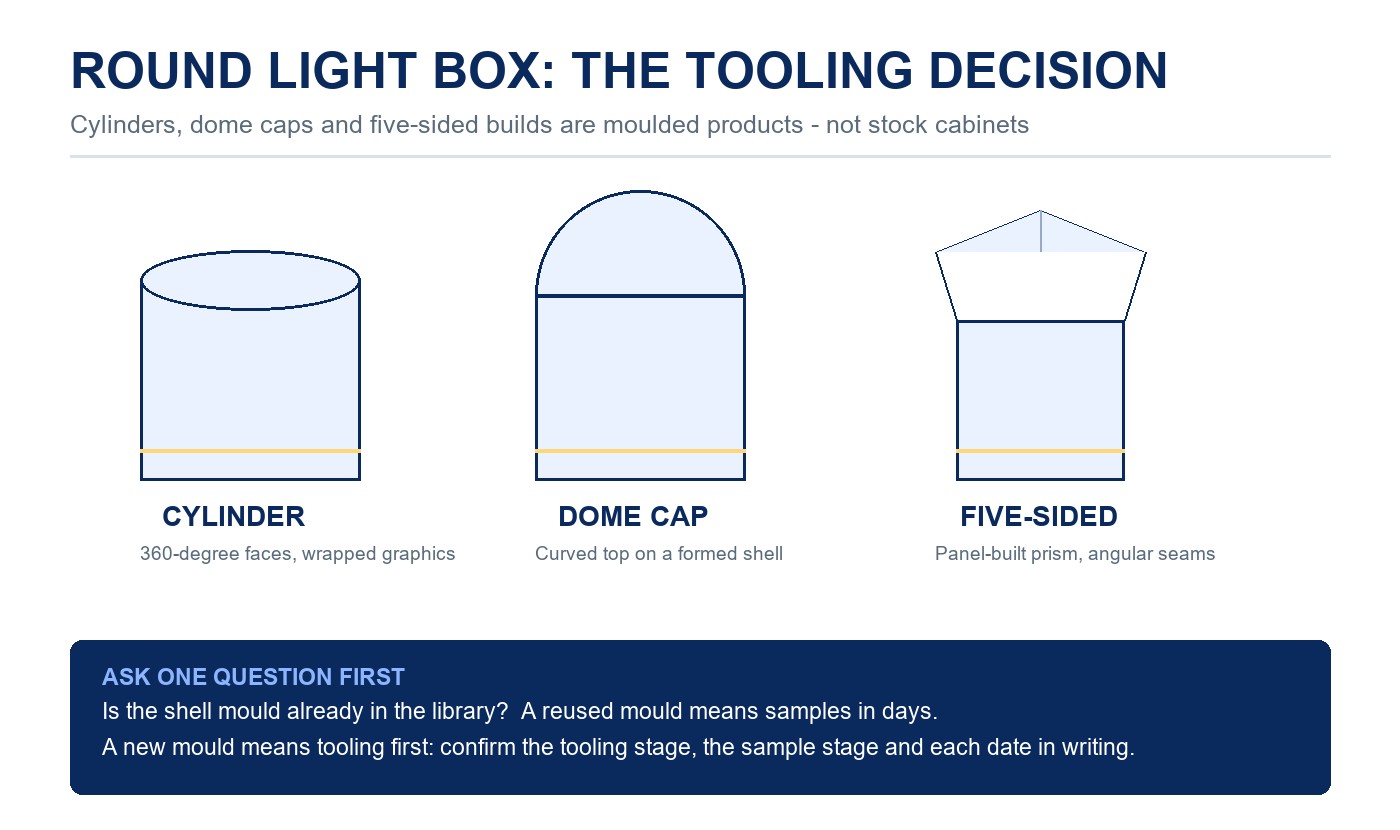
Five-sided and round light boxes are tooling products, not stock items: what the mould decision changes, five cost drivers and lead times to confirm.
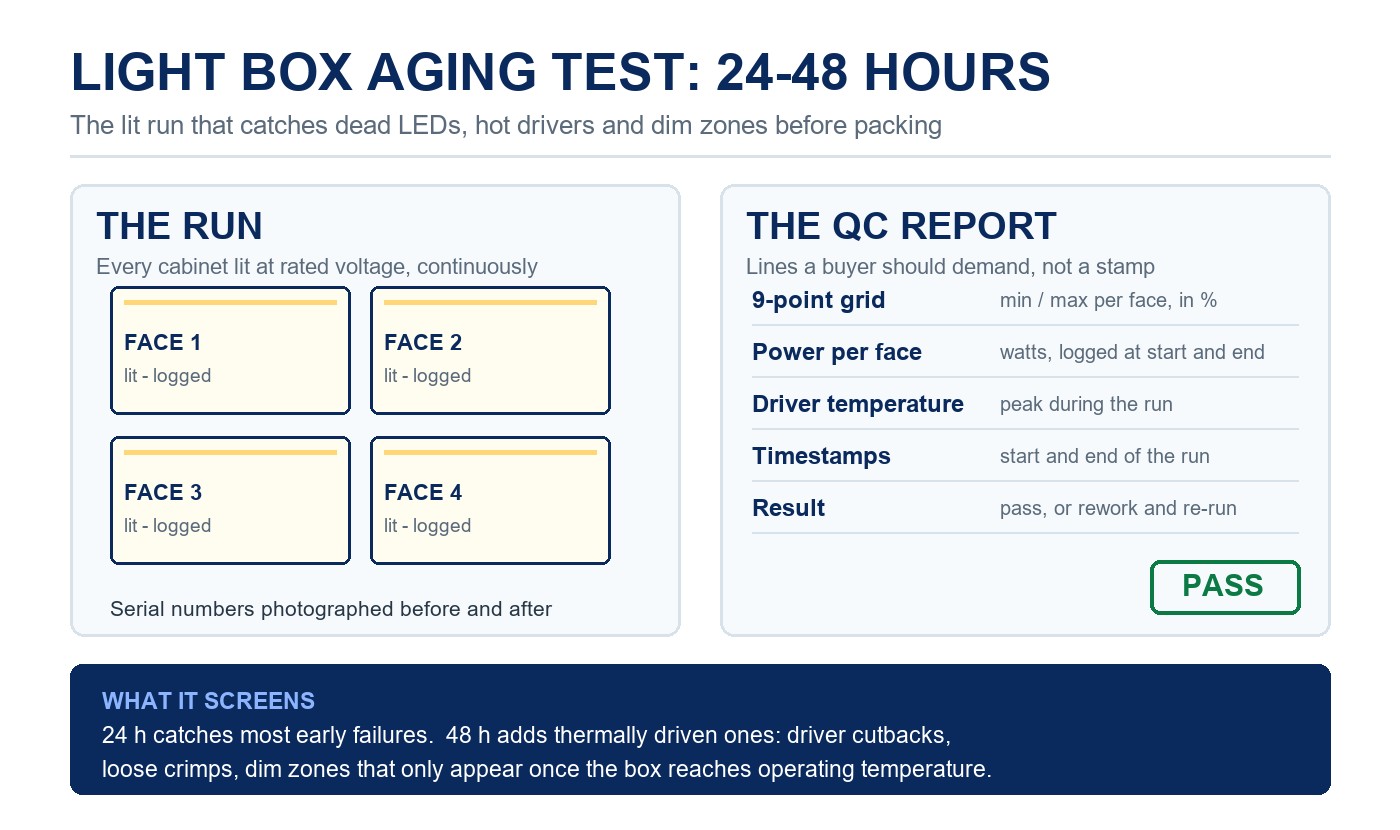
What a 24-48 hour light box aging test must cover: dead LEDs, driver heat, uniformity drift, and the QC report lines to demand before packing.
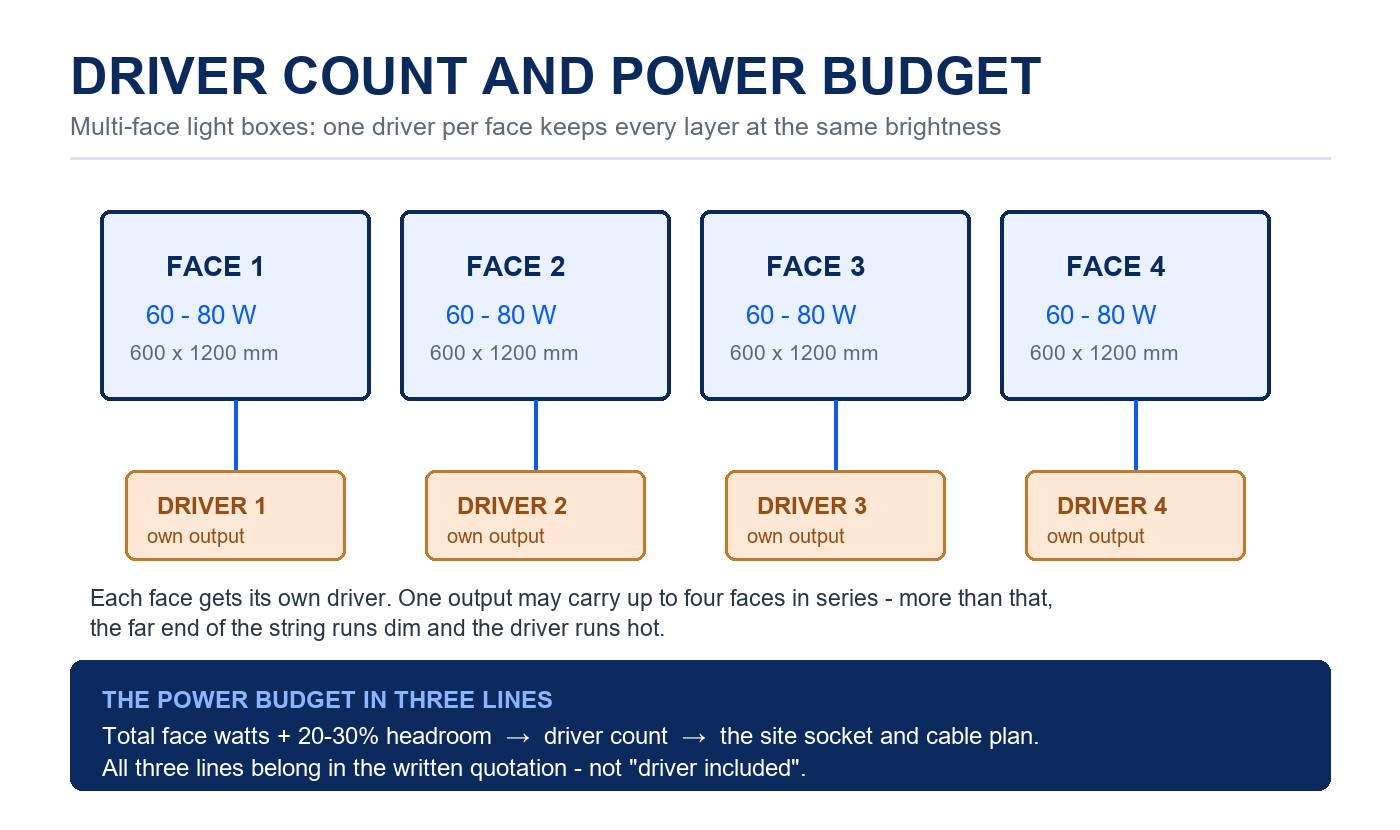
Multi-face light boxes live or die by the driver layout. See how the power budget is built, why strings go dim, and what the quotation must state.
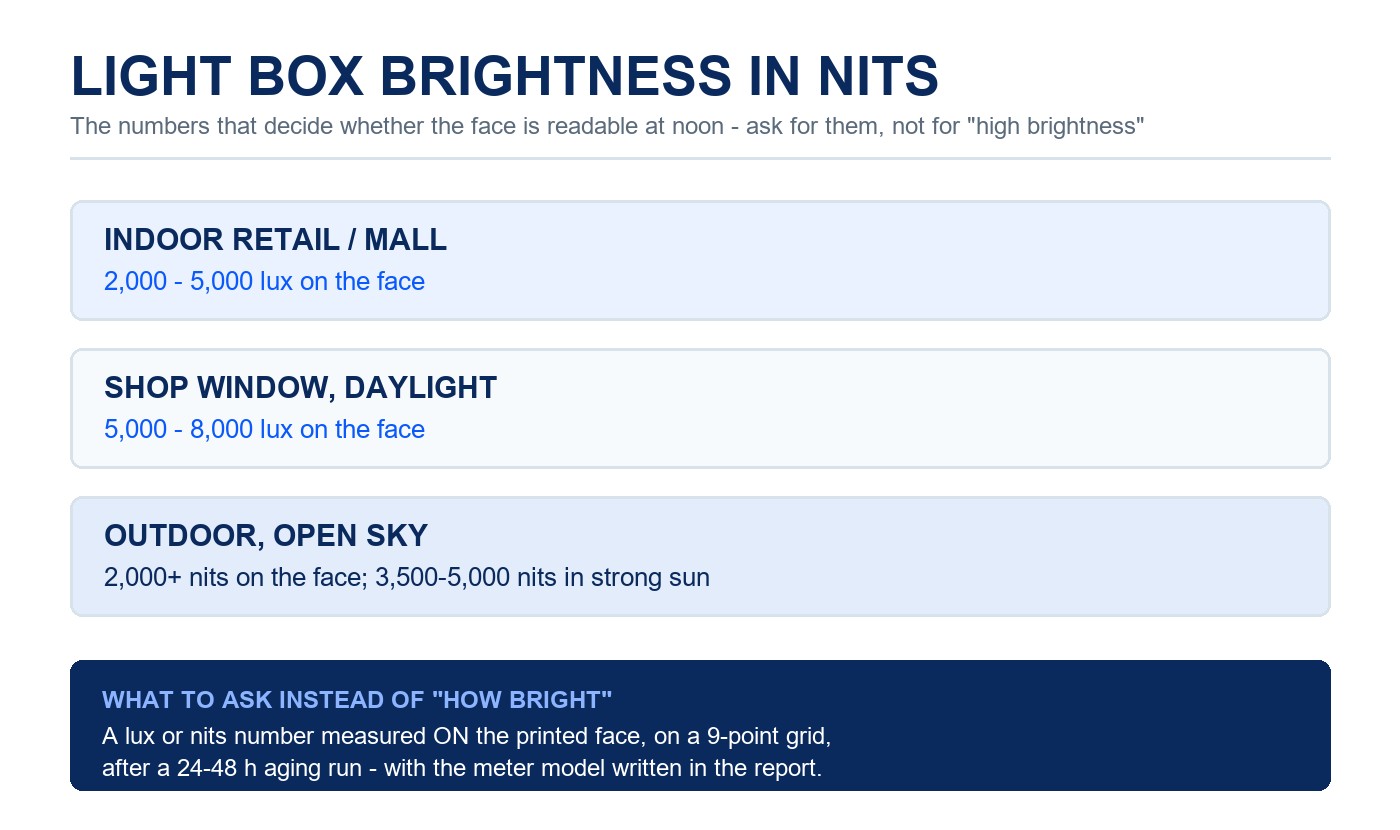
Light box brightness decides whether your print survives daylight. See the lux and nits ranges per site, how the measurement works, and what to ask a supplier.
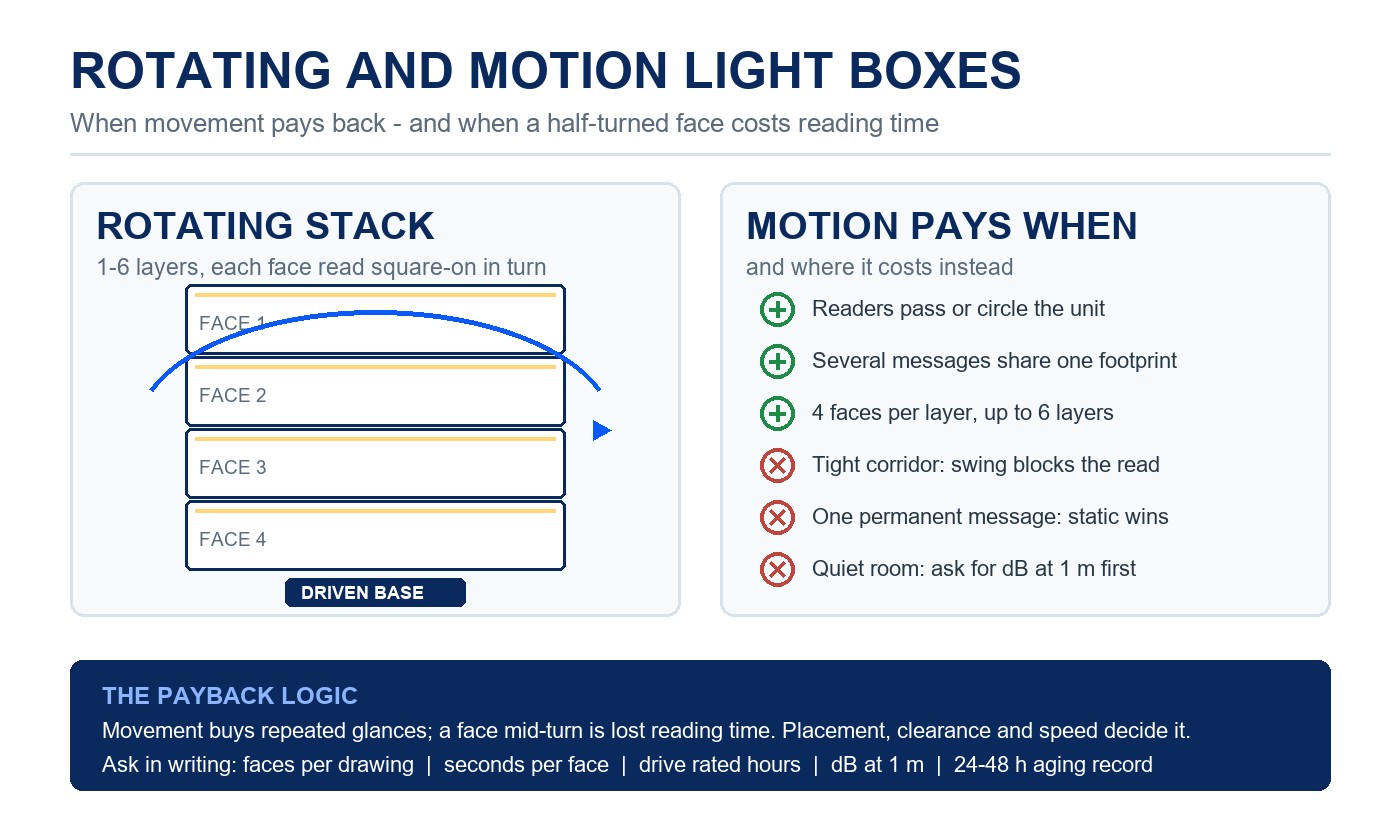
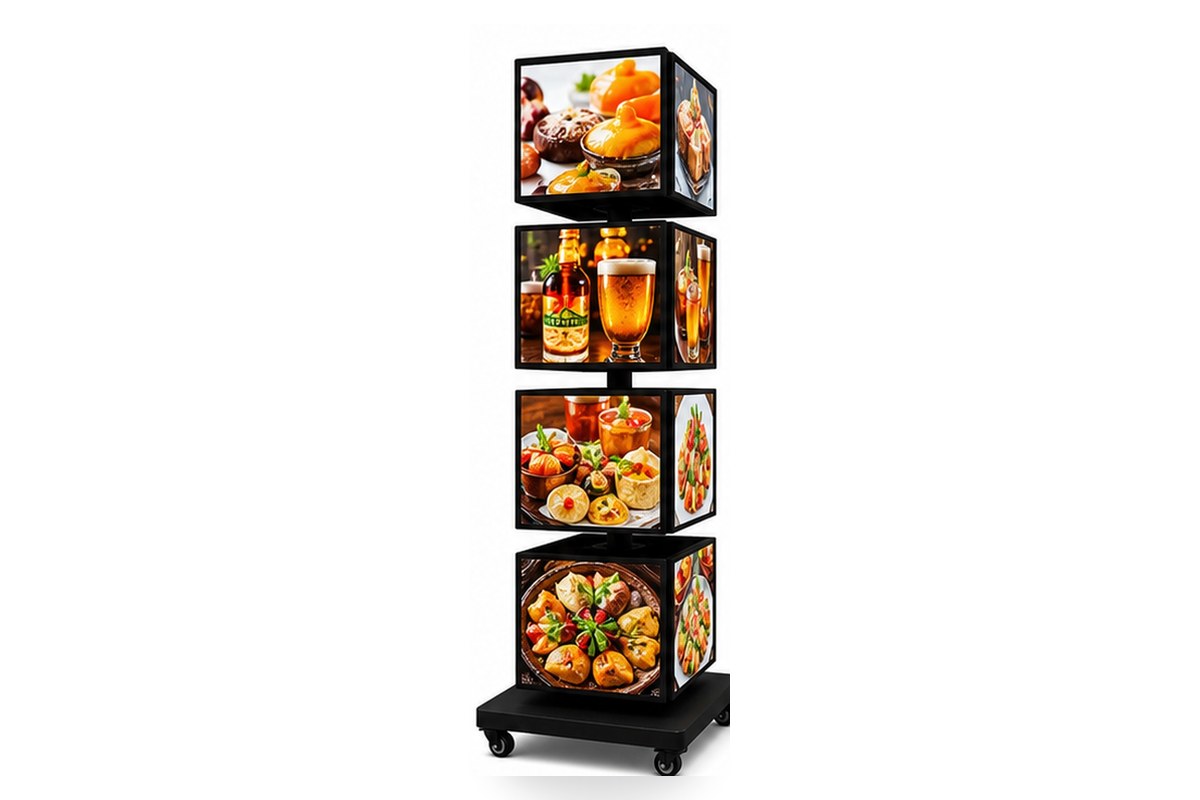
When a rotating light box pays back and when it costs reading time: layers and faces, noise, stability and the eight figures to confirm before ordering.
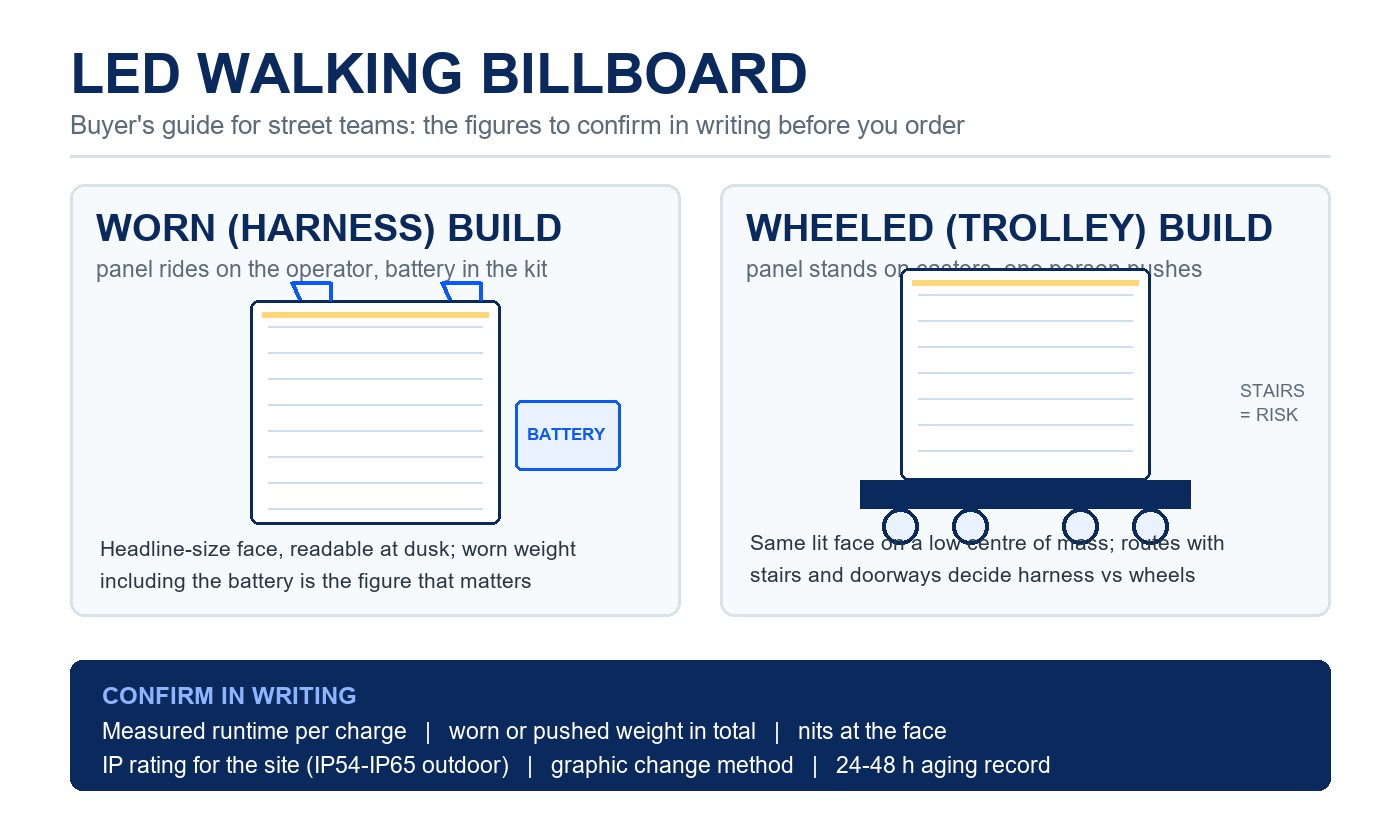
The LED walking billboard buyer's guide: battery runtime, worn weight, brightness and IP rating - the figures to confirm in writing before you order.
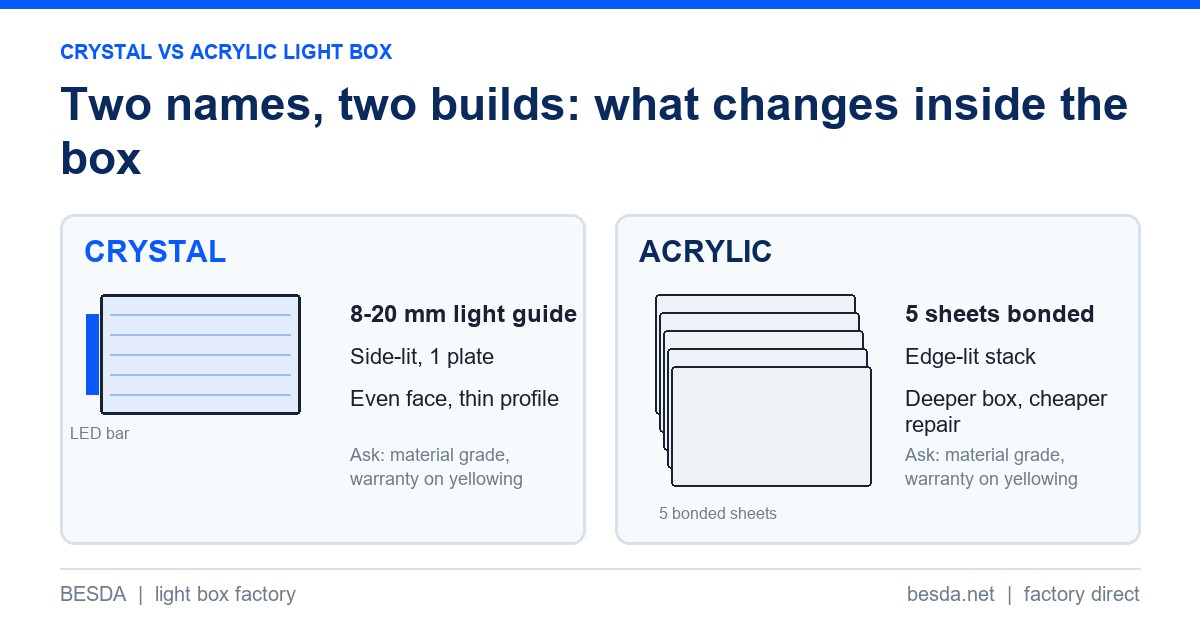
Crystal light boxes are edge-lit panels with 8-20 mm light guides; acrylic boxes are back-lit cabinets. See what changes in depth, uniformity and quote.
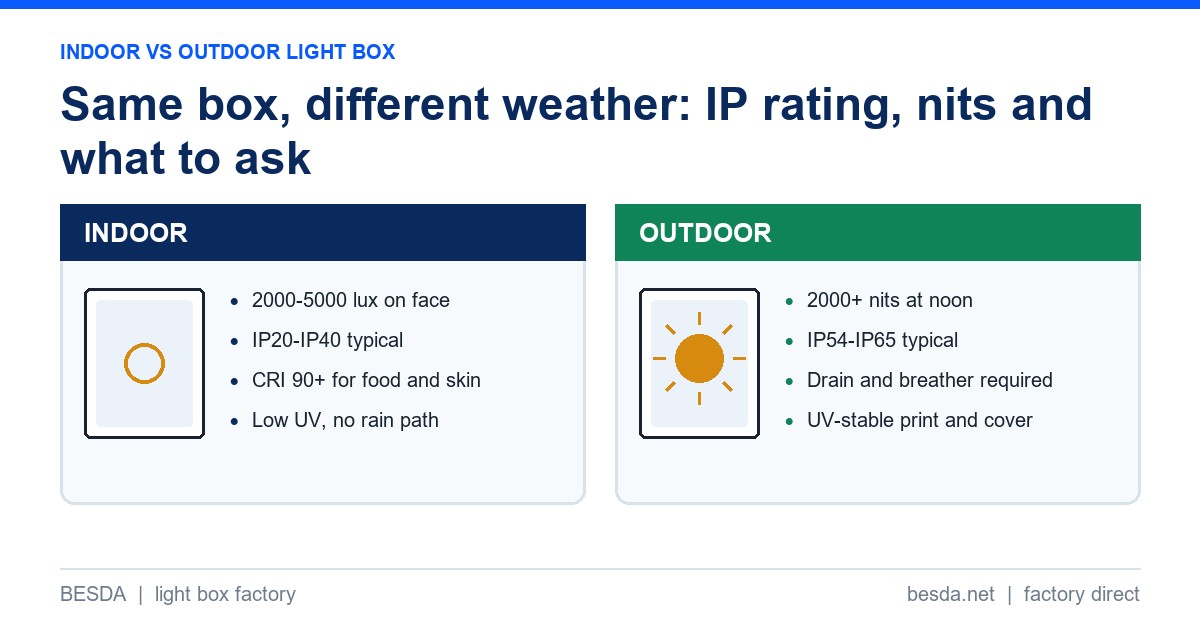
Outdoor LED light boxes need IP54-IP65, 2,000-5,000 nits and a UV-stable face. Indoor units run IP20-IP42. See the seven numbers to put in your next RFQ.